
Redhead
1962
No user ratings available yet
Representation score: 3.6 out of 10
Representation Score
Fair
1959
Director
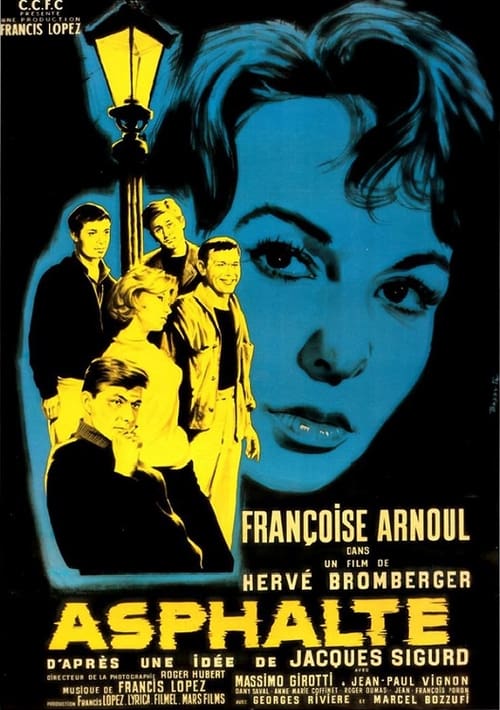
Hervé Bromberger
Runtime
95 minutes
Average Rating
No ratings yetNew Showbiz Analysis
Asphalt is a mid-century French drama that stands out for its portrayal of a woman's quest for personal freedom. By focusing on a woman's decision to leave her husband and reclaim her independence, the film provides a notable example of female empowerment for its time. However, the film's depiction remains confined to the traditional demographics of its era, with a homogeneous social circle and no representation of diverse racial backgrounds or LGBTQ+ identities. Additionally, there is no meaningful inclusion of characters with physical or neurodivergent disabilities. Overall, while the film offers a compelling character study of personal liberation, it falls short in providing broader diversity and systemic critiques.
Category Breakdown
The film adheres to the romantic norms of its time and does not include any LGBTQ+ identities or same-sex relationships.
The story revolves around a married woman who decides to break free from her traditional domestic role. Her actions challenge the passive stereotypes of women during that era.
The narrative seems to focus on a homogeneous Parisian social circle. There is no indication of diverse racial backgrounds or multi-layered casting.
The film presents a mild critique of societal norms through a character's rejection of the social contract of marriage. However, it does not offer a broader critique of institutions or systems.
There is no evidence of characters with physical or neurodivergent disabilities being integrated into the story in a meaningful way.
Present on Screen
Limited or Absent
Official Synopsis
Françoise Arnould plays here a married woman who decides one day to get away from her husband and return to her childhood place, where she meets all her former friends, and lovers.
1962

1958

1956

1963

1971
1965

1967
1960
No reviews yet. Be the first to share your thoughts on this movie!
Use the rating form above to leave a star rating and optional review.