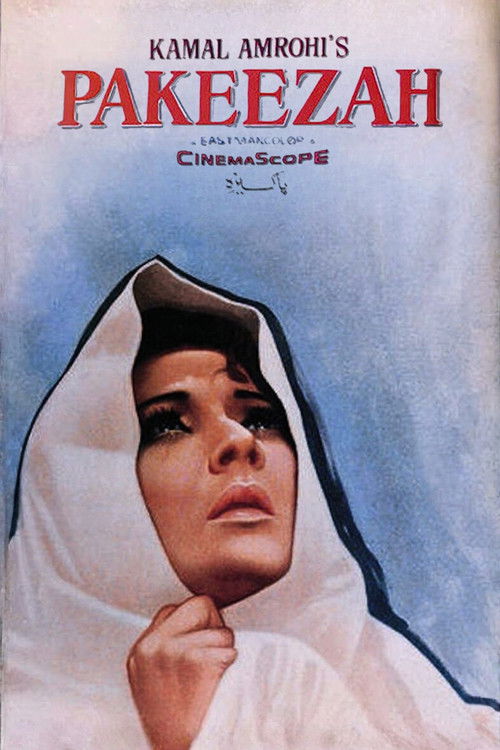
Pakeezah
1972
No user ratings available yet
Diversity score: 5.9 out of 10
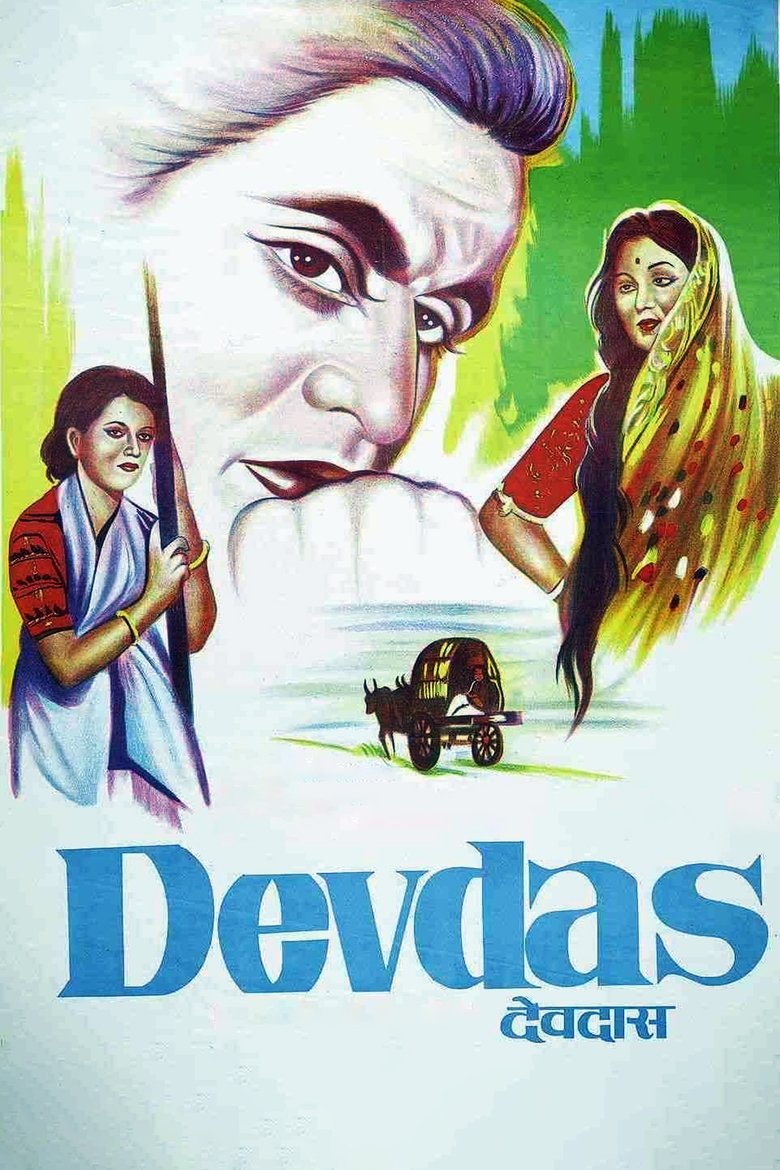
1955
Director
Bimal Roy
Runtime
159 minutes
Average Rating
No ratings yetSynopsis
Childhood sweethearts grow up in a small village with a love-hate relationship which changes to love when they mature.
Overall Score
Limited
Category Breakdown
LGBTQ+ Representation
The film contains no LGBTQ+ characters or non-heteronormative identities. Romantic arcs are strictly centered on traditional pairings without any engagement with queer identities.
Gender Representation
Gender roles adhere to mid-century hierarchies, with Paro defined by familial duty and Devdas embodying self-destructive masculinity. The narrative lacks agency-driven female characters, focusing instead on the male protagonist's psychological struggle.
Racial & Ethnic Diversity
Set in India, the film presents a culturally homogeneous cast. It offers an authentic exploration of Indian identity and social stratification rather than modern intersectional blending.
Religious & Cultural Diversity
The film critiques traditional institutions by portraying class and caste hierarchies as engines of destruction. It pits emotional authenticity against the rigid paths dictated by religious and social structures.
Disability Representation
There is no significant representation of physical or neurodivergent disabilities. The protagonist's alcoholism is treated as a tragic character flaw rather than a nuanced exploration of mental health.
Strengths
Areas for Improvement
AI Analysis
Bimal Roy’s *Devdas* is a work of social realism that prioritizes a critique of systemic class and caste hierarchies over modern diversity benchmarks. While the film excels in its authentic portrayal of Indian social stratification and its deconstruction of oppressive traditional institutions, it remains limited by the period's social constraints. The narrative is heavily centered on a male protagonist's internal struggle, which limits the agency of female characters and leaves the film without LGBTQ+ representation. This focus on traditional heteronormative structures and rigid gender roles keeps the diversity score modest. Ultimately, the film's strength lies in its sophisticated examination of how social order destroys individual truth. It functions more as a critique of systemic oppression than a diverse modern ensemble piece.
1972
1967
1959
1963

1951
No reviews yet. Be the first to share your thoughts on this movie!
Use the rating form above to leave a star rating and optional review.