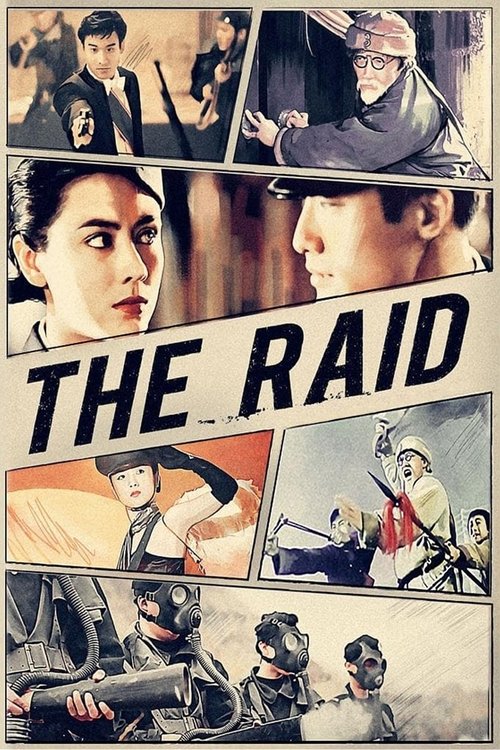
The Raid
1991
No user ratings available yet
Diversity score: 3.6 out of 10

1975
RDirector
Tsai Yang-Ming
Runtime
81 minutes
Average Rating
No ratings yetSynopsis
Yao Hao (Chen Sing), is a young man whose father was assassinated and whose mother was killed in an attack on the funeral procession. He survives the attack and winds up at a Shaolin temple where he insists he wants to stay and become a monk. His beautiful fiancée (Lu Shu Chin) pleads with him to come back with her, but he refuses. The head monk, Brother Fa (Chan Wai Man), an orphan who's been at the monastery all his life and is expecting to succeed the current Shaolin Abbot, is jealous of the privileges Yao Hao has had in life and asks him questions about the outside world, including what it's like to touch a woman. Brother Fa's weakening resolve soon finds him leaving the monastery and falling into the clutches of Lord Eagle (Kam Kong), the Manchu ruler in the area who's trying to wipe out all resistance to Manchu/Ching rule.
Overall Score
Fair
Category Breakdown
LGBTQ+ Representation
The film centers on heteronormative romance, specifically the bond between Yao Hao and his fiancée. No queer subtext or non-cisnormative identities are present.
Gender Representation
Gender roles remain traditional, with the female lead serving a secondary, supplicatory role. However, the film deconstructs masculine stability by portraying the monk Brother Fa as morally fragile.
Racial & Ethnic Diversity
Set during Manchu rule, the story explores ethnic hegemony and resistance. The conflict between Shaolin and the Manchu ruler highlights themes of ethnic agency against imperialist imposition.
Religious & Cultural Diversity
The narrative critiques religious institutions by showcasing the jealousy and moral failings of its members. It avoids idealized morality by exploring the tension between asceticism and worldly desire.
Disability Representation
There are no visible or invisible disabilities portrayed as central to the character arcs or plot progression.
Strengths
Areas for Improvement
AI Analysis
This martial arts drama functions primarily as a genre piece, focusing on the friction between individual agency and institutional hierarchies. While it lacks demographic breadth, it offers narrative depth by subverting the expectation of religious infallibility. The film's strength lies in its thematic complexity, particularly regarding the fragility of masculine discipline and the struggle against imperialist rule. It moves beyond simple heroics to examine the moral instability of those within sacred institutions. However, the film adheres to traditional gender dynamics and lacks representation for LGBTQ+ identities or characters with disabilities. Its diversity is found in political and institutional critique rather than social inclusivity.
1991
1990
1979
1979
1982
1977
1969
2011
1979
1978
1979
1980
No reviews yet. Be the first to share your thoughts on this movie!
Use the rating form above to leave a star rating and optional review.