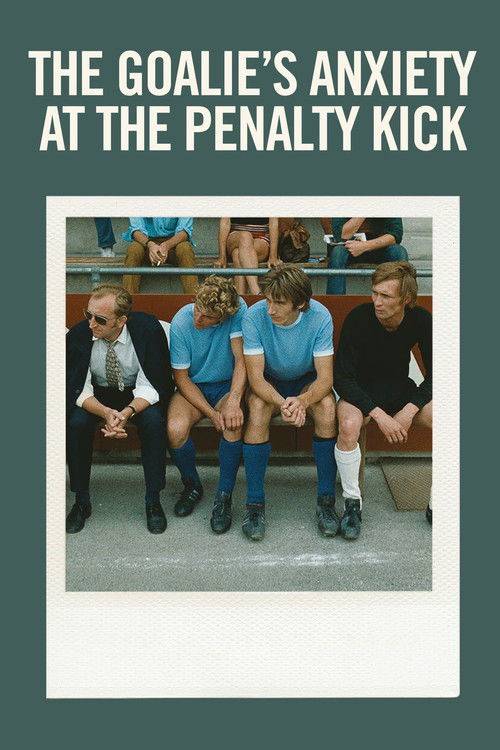
The Goalie's Anxiety at the Penalty Kick
1975
No user ratings available yet
Representation score: 4.8 out of 10

Representation Score
Good
1972
Director
Wim Wenders
Runtime
116 minutes
Average Rating
No ratings yetNew Showbiz Analysis
Summer in the City is a postmodern character study that centers on existential themes rather than diverse identity intersections. It successfully deconstructs traditional social hierarchies and state institutions by focusing on individual alienation. While the film avoids rigid domesticity found in mainstream 1970s cinema, it lacks explicit representation of LGBTQ+ identities, diverse racial backgrounds, or strong female characters. The narrative remains focused on a homogeneous European urban setting. Ultimately, the film's strength lies in its rejection of moral certainties, offering a progressive critique of social structures despite limited representation of various identities.
Category Breakdown
The film does not explicitly include non-binary or LGBTQ+ identities, but it focuses on individual experiences rather than rigid heterosexual family structures typical of 1970s cinema.
The narrative emphasizes internal psychological states over traditional gender roles. While it challenges conventional household hierarchies, it lacks strong female characters who take charge of their own lives.
The film is set in a predominantly white European urban environment and does not feature significant racial diversity or characters from different ethnic backgrounds.
The story promotes secularism and personal experience over traditional religious or nationalistic values, focusing on individual beliefs rather than collective traditions.
Themes of social isolation and psychological distress hint at possible explorations of mental health issues. However, the film does not depict characters with disabilities taking control of their situations.
Present on Screen
Limited or Absent
Official Synopsis
After a long prison term, a free man wanders into a new reality.
1975
1976

1970
1961
1975
1970

1976

2003
No reviews yet. Be the first to share your thoughts on this movie!
Use the rating form above to leave a star rating and optional review.