
Smarty
1934
No user ratings available yet
Representation score: 0.8 out of 10
Representation Score
Minimal
1931
ApprovedDirector
Jack Raymond, Arthur Varney
Runtime
61 minutes
Average Rating
No ratings yetNew Showbiz Analysis
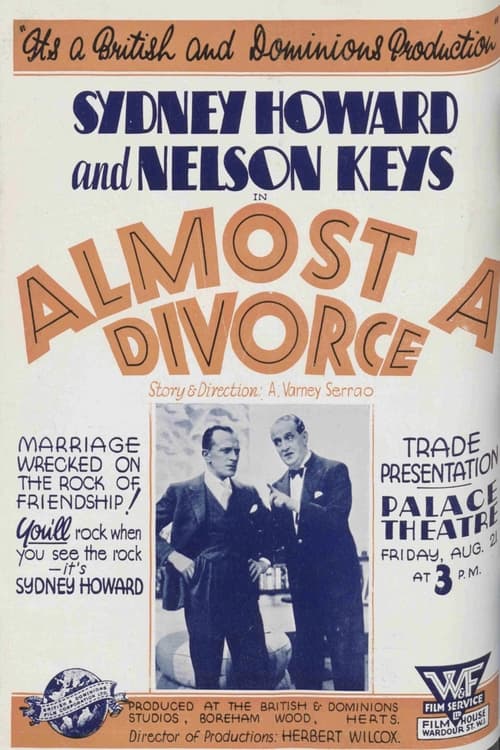
Almost a Divorce is a product of the early British sound era, adhering to the comedic standards of the 1930s. The film serves as a traditional period piece that prioritizes farcical matrimonial complications over social commentary. Its narrative structure reinforces conventional social hierarchies and domestic norms. The conflicts arise from personal failings within a standard marital framework rather than any progressive deconstruction of identity or social status. Ultimately, the film lacks the intentionality needed to disrupt established norms, reflecting the homogeneous and traditional casting and thematic patterns of its time.
Category Breakdown
The film does not include any LGBTQ+ characters or stories. It focuses on traditional heterosexual marriage and domestic stability.
The story revolves around a man's actions affecting a traditional marriage. It follows typical gender roles without challenging existing hierarchies.
The film reflects the homogeneous society of 1930s Britain. There is no indication of diverse casting or non-Anglo-Saxon representation.
The narrative emphasizes Western values related to domestic life and social etiquette. It focuses on marital stability without critiquing broader societal structures.
There is no information about characters with physical, sensory, or neurodivergent disabilities.
Present on Screen
Limited or Absent
Official Synopsis
'Farcical comedy of matrimonial complications in which a bibulous man almost wrecks his friend's marriage.' (British Film Institute)
1934
1939
1934
1937

1915
1937
1929
1931
No reviews yet. Be the first to share your thoughts on this movie!
Use the rating form above to leave a star rating and optional review.