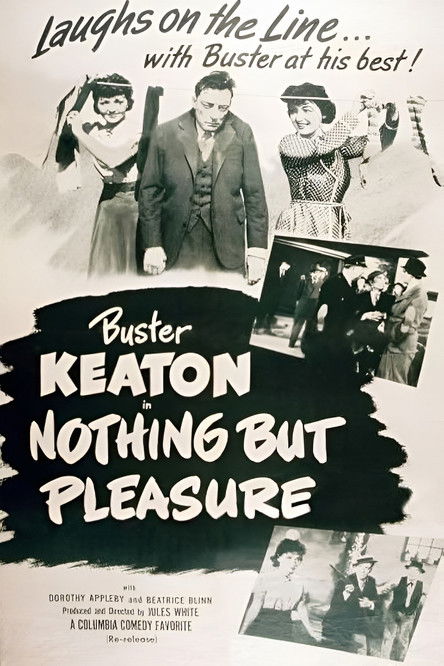
Nothing But Pleasure
1940
No user ratings available yet
Representation score: 0.7 out of 10

Representation Score
Minimal
1927
Director
Alan Hale
Runtime
52 minutes
Average Rating
No ratings yetNew Showbiz Analysis
Rubber Tires is a conventional silent comedy that emphasizes traditional family dynamics and economic aspirations. The plot follows a standard trajectory of a family seeking stability through relocation and unexpected wealth. The film offers very little disruption to the social or cultural norms of its era. It relies on established clichés of the 1920s, focusing on a singular, homogeneous family unit. While the female lead initiates the plot, the film remains anchored in the period's standard social frameworks, offering minimal representation of diverse identities or systemic critiques.
Category Breakdown
The film does not include any characters with non-straight identities. The story revolves around a traditional family structure typical of the 1920s.
Mary Ellen provides a spark of influence by suggesting the family's relocation. However, her role likely supports domestic stability rather than challenging existing gender roles.
The narrative focuses on a single family dealing with financial struggles. There is no indication of a diverse cast beyond the homogeneous domestic setting.
The plot reinforces traditional Western economic ideals through the pursuit of the American Dream. It follows a standard storyline of overcoming financial setbacks through unexpected wealth.
There are no characters with visible or invisible disabilities in the narrative.
Present on Screen
Limited or Absent
Official Synopsis
When the Stack family suffers some financial setbacks, daughter Mary Ellen suggests they buy a car and relocate to California. Unbeknownst to them, their used car is worth more than they ever could have imagined.
1940

1934
1931

1920
1951
1929
1936
1932
No reviews yet. Be the first to share your thoughts on this movie!
Use the rating form above to leave a star rating and optional review.