The Happening
2008
No user ratings available yet
Representation score: 2.9 out of 10
Representation Score
Minimal
1971
GDirector
Robert Wise
Runtime
131 minutes
Average Rating
No ratings yetNew Showbiz Analysis
The film functions as a clinical procedural that prioritizes systemic order over social complexity. It reinforces traditional hierarchies by centering authority within male-dominated scientific and military institutions. The narrative lacks depth in representing diverse identities, presenting a homogeneous professional landscape that reflects the social norms of the early 1970s. It focuses on empirical objectivity rather than diverse human perspectives. Ultimately, the work serves as a celebration of technocratic stability, using a traditional framework to drive its high-stakes scientific crisis.
Category Breakdown
The film maintains a strictly heterosexual environment. There is no presence of LGBTQ+ identities or same-sex relationships among the scientists.
A patriarchal structure dominates the narrative. Intellectual and institutional authority is held almost exclusively by men, leaving female characters with limited influence.
The cast is demographically uniform. The professional setting is portrayed as predominantly Anglo-Saxon, reflecting the era's social norms.
The story celebrates Western scientific methods and military protocols. It portrays institutional authority as the main defense against cosmic threats.
Disability is not a theme of character development. An alcoholic is mentioned only as a clinical variable rather than a fully developed character.
Present on Screen
Limited or Absent
Official Synopsis
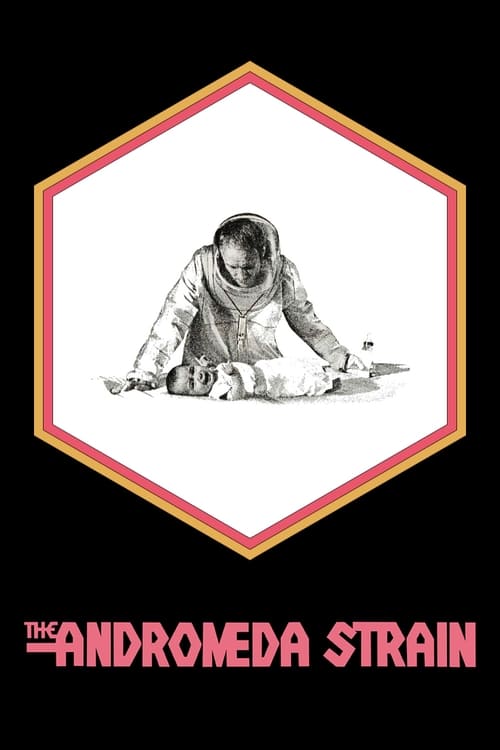
When virtually all of the residents of Piedmont, New Mexico are found dead after the return to Earth of a space satellite, the head of the US Air Force's Project Scoop declares an emergency. A group of eminent scientists led by Dr. Jeremy Stone scrambles to a secure laboratory and tries first to isolate the life form while determining why two people from Piedmont - an old alcoholic and a six-month-old baby - survived. The scientists methodically study the alien life form, unaware that it has already mutated and presents a far greater danger in the lab, which is equipped with a nuclear self-destruct device designed to prevent the escape of dangerous biological agents.
2008
1970

1984
1954

1973
1983

2013

1985
No reviews yet. Be the first to share your thoughts on this movie!
Use the rating form above to leave a star rating and optional review.