
Woodstock 99: Peace, Love, and Rage
2021
No user ratings available yet
Representation score: 7.1 out of 10
Representation Score
Limited
2020
Director
Tom O'Dell
Runtime
107 minutes
Average Rating
No ratings yetNew Showbiz Analysis
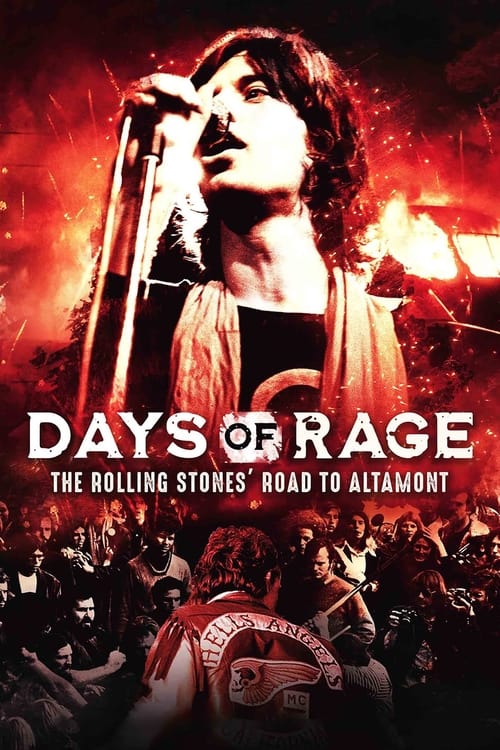
Days of Rage: The Rolling Stones' Road to Altamont functions as a historical reconstruction of a specific cultural turning point. It prioritizes chronological and thematic accuracy over modern social issues. The documentary reflects the demographic and social hierarchies of the late 1960s. While it offers a nuanced look at the failure of social idealism, it lacks intentionality in addressing diverse identities. Ultimately, the film serves as a mirror to the era's specific musical and social landscape, capturing the transition from utopian optimism to chaotic violence.
Category Breakdown
The film focuses on the Rolling Stones and the 1960s counterculture. It lacks explicit queer narratives or diverse gender identities, reflecting the era's mainstream focus.
The narrative centers on male band members and male-led security elements like the Hells Angels. The story emphasizes male-driven social movements and the breakdown of order.
The documentary depicts a predominantly white rock scene of the 1960s. It reflects the era's demographic realities rather than prioritizing non-white ability to act or diverse representation.
The film deconstructs the 1960s 'peace and love' idealism by documenting the descent into violence. It challenges traditional views of social stability and utopianism.
There is no evidence of characters or historical figures with visible or invisible disabilities. The focus remains on macro-societal shifts and specific concert events.
Present on Screen
Limited or Absent
Official Synopsis
The decade that began with peace and love was shattered in the late 1960s amidst riots, assassinations and a war that wouldn't end. The Rolling Stones became the voice of this new era, which came to a horrific end at the Altamont festival.
2021
1981
2019

2021
2019

2016
1968
2019
No reviews yet. Be the first to share your thoughts on this movie!
Use the rating form above to leave a star rating and optional review.