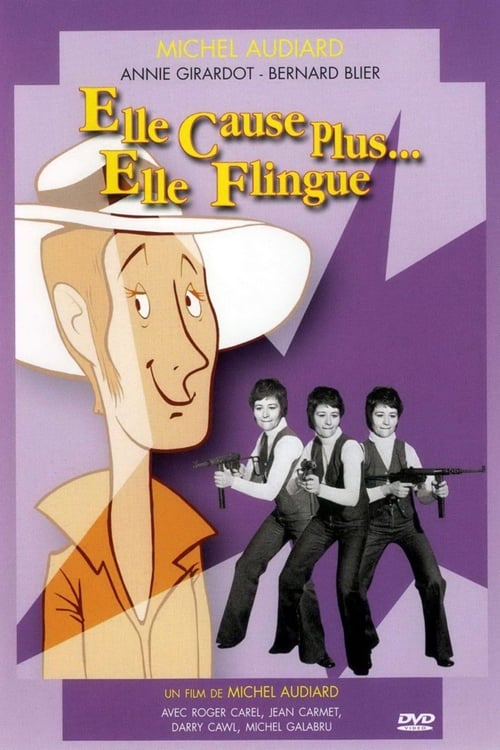
She No Longer Talks, She Shoots
1972
No user ratings available yet
Representation score: 5.4 out of 10
Representation Score
Fair
1972
RDirector
François Truffaut
Runtime
98 minutes
Average Rating
No ratings yetNew Showbiz Analysis
The film excels at challenging traditional gender roles by centering a female protagonist who disrupts domestic stability. Camille Bliss is the primary driver of the story, while the male character remains a secondary observer. Culturally, the work challenges Western social institutions and the moral authority of the law. By focusing on a criminal's subjective experience, it deconstructs the concept of the traditional family unit. However, the film's diversity profile is limited by a lack of explicit information regarding LGBTQ+ identities and insufficient detail to assess racial and ethnic diversity.
Category Breakdown
The film explores unconventional romantic choices and complex love affairs. However, it lacks explicit depictions of LGBTQ+ identities, keeping the representation in a moderate range.
Camille Bliss serves as the central figure, driving the plot through her own testimony. The film challenges traditional gender roles by relegating the male sociologist to a passive, observational role.
The provided information does not offer enough detail regarding the ethnic composition of the cast to assess racial diversity.
The narrative critiques the sanctity of marriage and traditional domesticity. It prioritizes personal truth over legal or religious morality through the protagonist's subjective lens.
There is no evidence within the narrative to suggest the presence of characters with visible or invisible disabilities.
Present on Screen
Limited or Absent
Official Synopsis
Young sociologist Stanislas Previne is writing a thesis on criminal women, so he visits Camille Bliss in prison for an interview. Accused of murdering her husband and her lover, Camille recounts her life and love affairs.
1972
1964

1972
1960
1968
1964
1963
1980
No reviews yet. Be the first to share your thoughts on this movie!
Use the rating form above to leave a star rating and optional review.