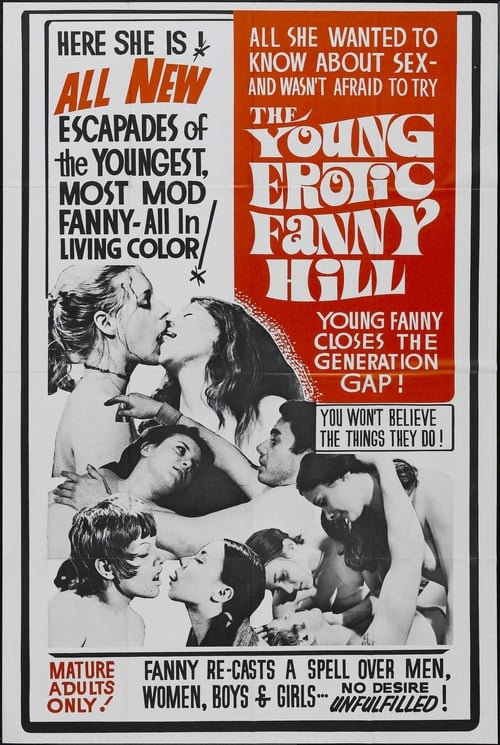
The Young, Erotic Fanny Hill
1970
No user ratings available yet
Representation score: 4.2 out of 10
Representation Score
Fair
1973
RDirector
Jesús Franco
Runtime
87 minutes
Average Rating
No ratings yetNew Showbiz Analysis
Jesús Franco’s work challenges the social norms of the 1970s by focusing on transgression and the deconstruction of voyeuristic structures. The film succeeds in subverting gendered power dynamics and embracing non-straight relationships, providing significant progressive value for its time. However, the film remains limited by its lack of racial diversity, reflecting the localized demographic norms of the European cult cinema movement. While it explores psychological liberation, it does not address disability or broader multi-layered identities. Ultimately, the film is a study of personal ability to act and the rejection of social decorum, prioritizing the protagonist's internal reality over external conformity.
Category Breakdown
The film centers around a lesbian relationship between the protagonist and a countess. This relationship is integral to the character's development rather than a minor subplot.
The narrative emphasizes female subjectivity and ability to act by centering the female perspective. The protagonist drives the plot through her own desires rather than being a passive figure.
The film features a primarily European cast typical of the Euro-cult movement. There is no evidence of significant racial blending or multi-layered casting.
The story presents a world where traditional Western morality is seen as restrictive. It frames unconventional behaviors as personal liberation rather than moral failure.
There is no discernible evidence regarding the representation of physical or neurodivergent disabilities in this work.
Present on Screen
Limited or Absent
Official Synopsis
Linda comes to the big city in search of fun and excitement. What she finds is exploitation and abuse at the hands of a succession of sleazy guys. Searching for love, she enters into a lesbian relationship with a beautiful countess, discovers drugs and swingers' parties and starts acting in porno movies. She also begins to write a secret diary...
1970
1977
1982

1980
1968

2021
1965
1970
No reviews yet. Be the first to share your thoughts on this movie!
Use the rating form above to leave a star rating and optional review.