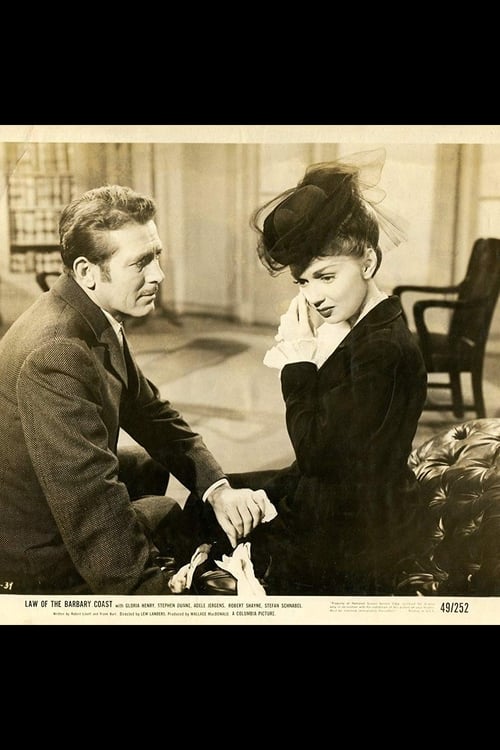
Law of the Barbary Coast
1949
No user ratings available yet
Diversity score: 2.3 out of 10

1932
PassedDirector
Albert Ray
Runtime
70 minutes
Average Rating
No ratings yetSynopsis
Ruth Payne, innocent to begin with, is trying to extradite herself from the clutches of a gang-mob who obtained her release from prison on a falsified confession because they thought she knew something they didn't want known.
Overall Score
Limited
Category Breakdown
LGBTQ+ Representation
The film lacks any evidence of non-cisnormative identities or same-sex intimacy. It adheres to the heteronormative social structures typical of 1932 cinema.
Gender Representation
Ruth Payne serves as a proactive protagonist fighting for her survival. However, the plot relies on her being victimized by masculine-coded criminal forces.
Racial & Ethnic Diversity
There is no indication of a diverse or non-Anglo-Saxon cast. The production likely reflects the homogeneous casting standards of early Hollywood.
Religious & Cultural Diversity
The story focuses on the tension between legal truth and criminal deception. It reinforces traditional frameworks of justice rather than exploring subversive cultural themes.
Disability Representation
The film provides no information regarding the inclusion or portrayal of characters with physical or neurodivergent disabilities.
Strengths
Areas for Improvement
AI Analysis
Guilty or Not Guilty is a standard genre piece that prioritizes traditional crime mechanics over social disruption. While the female lead shows individual agency, the film remains rooted in the era's conventional hierarchies. The narrative lacks intersectional complexity, focusing instead on a straightforward struggle for exoneration. It functions as a product of its time, reflecting the homogeneous casting and social norms of the early 1930s. Ultimately, the film offers little in the way of cultural or identity-based depth, serving primarily as a crime and adventure procedural.
1949

1935

1937
1942
No reviews yet. Be the first to share your thoughts on this movie!
Use the rating form above to leave a star rating and optional review.