Here and Elsewhere
1976
No user ratings available yet
Representation score: 7.0 out of 10
Representation Score
Good
1963
Director
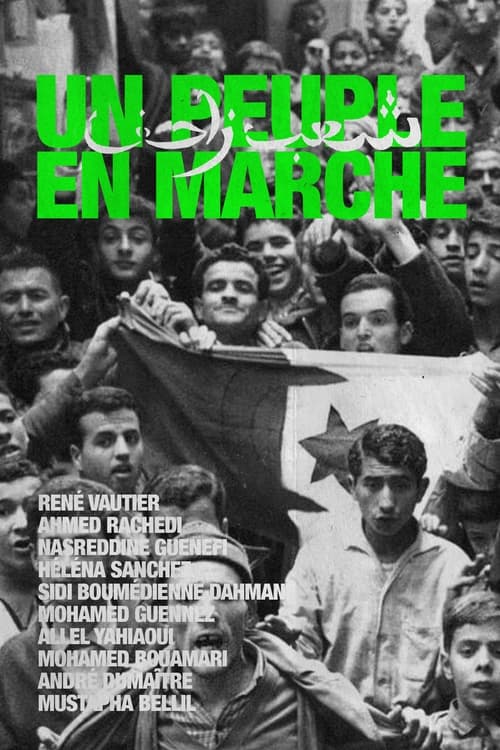
Nasredine Guénifi, Ahmed Rachedi, René Vautier, Helena Sánchez, Sidi Boumedienne Dahmane, Mohamed Guenez, Allel Yahiaoui, Mohamed Bouamari, André Dumaître, Taïbi Mustapha Bellil
Runtime
55 minutes
Average Rating
No ratings yetNew Showbiz Analysis
A People on the March serves as a powerful act of historical reclamation. By focusing on the Algerian National Liberation Army and the lived experiences of the people, the film shifts the perspective from a colonial observer to an active participant. The collaborative filmmaking process between Algerian creators and René Vautier creates a cinematic bridge that challenges Eurocentric historical narratives. While the film excels in racial and cultural ability to act, it remains a product of its era and genre. It lacks specific representation of LGBTQ+ identities or disabilities, focusing instead on the broader geopolitical struggle for sovereignty.
Category Breakdown
The film focuses on the Algerian War and the Algerian National Liberation Army. It does not explore LGBTQ+ identities or non-traditional gender roles.
Women play active roles in the film, participating in resistance and reconstruction efforts. However, the film does not delve deeply into the impact on traditional masculinity.
By centering the Algerian experience, the film gives ability to act back to the non-Western majority. Collaborative production between Algerian and French filmmakers challenges traditional racial power structures.
The film portrays the struggle for independence as a fight for self-determination against oppressive Western institutions. It emphasizes local ability to act during the reconstruction period.
The documentary focuses on geopolitical conflict and national reconstruction. There is insufficient information to evaluate the portrayal of specific disabilities or neurodivergence.
Present on Screen
Limited or Absent
Official Synopsis
Collectively directed by the members of the Centre audiovisuel d'Alger at Ben Aknoun, the film traces, in two parts, Algeria's recent history, from colonial repression to the birth of the National Liberation Army, and the country's postwar reconstruction, framed in sympathy with the socialist project of Ahmed Ben Bella's government. Released in 1964, the film was banned and sealed after Houari Boumediene's June 1965 coup, precisely because of its favorable treatment of Ben Bella.
1976
2017
1992

1972
2004
1975
1965

2003
No reviews yet. Be the first to share your thoughts on this movie!
Use the rating form above to leave a star rating and optional review.