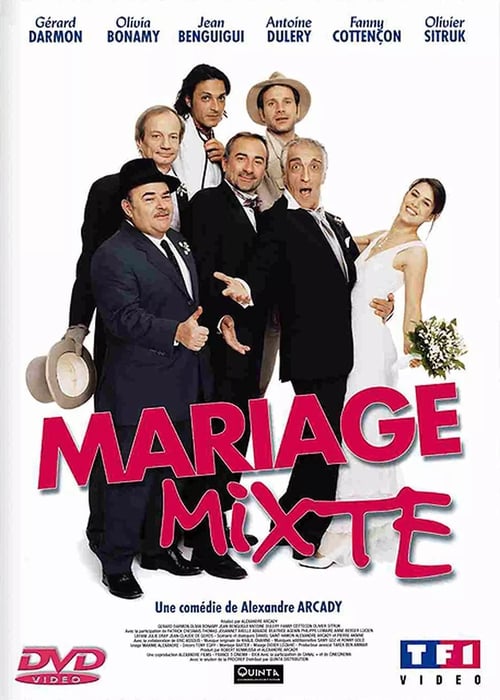
Mixed Marriage
2004
No user ratings available yet
Diversity score: 4.2 out of 10

1978
Director
Vitaliy Melnikov
Runtime
94 minutes
Average Rating
No ratings yetSynopsis
Based on the comedy of the same name by Nikolai Gogol. Succumbing to the persuasion of his friend Kochkaryov, a middle-aged court adviser Podkolyosin wooed to the overripe girl Agafya Tikhonovna, a merchant's daughter. At the very last moment, having gone through a painful period of matchmaking, and bringing the matter to a wedding, indecisive grief — the groom escapes from under the crown, jumping into the window...
Overall Score
Limited
Category Breakdown
LGBTQ+ Representation
The film adheres to the heteronormative social structures of its 19th-century setting. There is no evidence of non-cisnormative gender identities or same-sex intimacy within the narrative.
Gender Representation
Agafya Tikhonovna provides meaningful agency as a central driver of the matchmaking tension. The film subverts masculine archetypes by portraying the groom's indecision as the primary narrative engine.
Racial & Ethnic Diversity
The cast reflects a homogeneous social stratum consistent with the era and literary source. There is no visible evidence of intersectional racial blending within the production.
Religious & Cultural Diversity
The narrative disrupts the sanctity of traditional social institutions by centering on the absurdity of matchmaking. The groom's escape functions as a rejection of societal duty.
Disability Representation
There is no documented evidence of characters with visible or invisible disabilities being utilized as plot devices or central figures.
Strengths
Areas for Improvement
AI Analysis
Vitaliy Melnikov’s adaptation of Gogol’s comedy functions as a character study of social performance. It finds its strength in deconstructing the trope of the successful marriage by highlighting the friction between individual impulse and rigid social expectations. However, the film remains largely confined to the cultural parameters of its period setting. It lacks the intersectional complexity and demographic breadth required to move beyond a traditional, localized focus. Ultimately, the work prioritizes psychological nuance over systemic representation, focusing on the collapse of domestic hierarchies rather than diverse social inclusion.
2004
1992
1985
1962
1961

1988

1988

1954
1961

1968
1944
1984
No reviews yet. Be the first to share your thoughts on this movie!
Use the rating form above to leave a star rating and optional review.