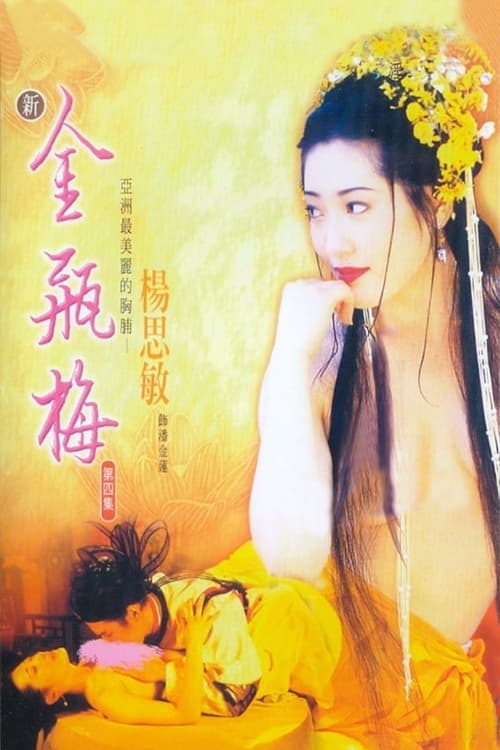
New Golden Lotus IV
1996
No user ratings available yet
Representation score: 7.5 out of 10

Representation Score
Good
1991
Director
Li Han-Hsiang
Runtime
95 minutes
Average Rating
No ratings yetNew Showbiz Analysis
The film offers a critical examination of societal decline, replacing idealized historical clichés with a raw depiction of greed, lust, and survival. While the setting is culturally specific and homogeneous, the narrative is progressive in its handling of moral ambiguity, emphasizing personal desires over societal norms. However, the film remains confined to straight-centered dynamics and lacks representation of disability or neurodivergence.
Category Breakdown
The story focuses on heterosexual relationships and traditional friendships, with no indication of diverse gender identities or same-sex dynamics among the main characters.
The film challenges traditional gender roles by highlighting the active role of female characters such as Pan Jing Lien and Lee Ping Er, who drive the plot forward and question conventional notions of female virtue.
Set in Imperial China, the film features a culturally uniform cast. It achieves authenticity by deeply exploring Ming Dynasty social structures without a Western perspective.
The film dismantles traditional institutions and the merchant class by embracing moral relativism and situational ethics, portraying the household as a site of dysfunction rather than stability.
The film does not significantly address neurodivergence or physical disabilities. Character struggles are mainly socio-economic and psychological, with little emphasis on disability as part of the narrative.
Present on Screen
Limited or Absent
Official Synopsis
A corrupt local official, Xi Men Qing, who lusts after women and money, pursues his brother's young wife, Lee Ping Er. Ping finds Men attractive, and under her drunken husband's nose, she and Men work their way through the illustrations of a pillow book, the "Golden Lotus." Men pursues the same feat with his fourth concubine, Pan Jing Lien, who lives in the compound next to Ping. Jing's jealousy compounds a tale of humiliation, childbirth, death, and depravity. Does karma or enlightenment await anyone?
1996

1976

1996

1976

1996
2008
1993
1969
No reviews yet. Be the first to share your thoughts on this movie!
Use the rating form above to leave a star rating and optional review.