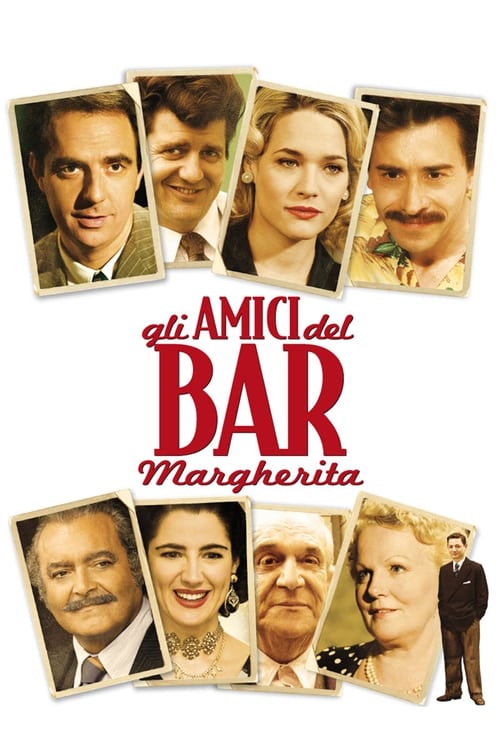
The Dinner
1998
No user ratings available yet
Representation score: 6.2 out of 10
Representation Score
Good
2009
Director
Pupi Avati
Runtime
90 minutes
Average Rating
No ratings yetNew Showbiz Analysis
Pupi Avati presents a character-driven study of social outsiders in mid-century Bologna. The film replaces traditional heroic figures with eccentric, vulnerable individuals living on the fringes of mainstream society. However, the period setting restricts the range of diversity. The narrative reflects the demographic homogeneity of 1950s Italy, and psychological complexities are used more as plot devices than deep explorations of disability or identity. Ultimately, the film celebrates the unconventional. It avoids rigid social structures by focusing on the complexity of human nature and the shared sanctuary of the café.
Category Breakdown
The film explores unconventional romantic relationships and social behaviors. However, it doesn't explicitly confirm any characters' non-cisgender identities.
Masculinity is shown through vulnerability and eccentricity rather than dominance. The story challenges traditional male stereotypes by focusing on the domestic lives and eccentricities of its male characters.
Set in 1954 Bologna, the cast reflects the homogeneous demographics of mid-century Italy. The story emphasizes social class and individual personalities over ethnic or multicultural representation.
The film centers on a sanctuary for misfits, highlighting individual uniqueness over institutional norms. This focus subtly critiques conventional social respectability.
Characters face psychological challenges like phobias and personal struggles. These traits serve more as character quirks than a focused exploration of neurodiversity.
Present on Screen
Limited or Absent
Official Synopsis
Bologna, 1954. Taddeo, a young man of 18 whom everyone calls Kid, dreams of becoming one of the regulars of the mythical Margherita Café, located under the portico across from his family's home. Through a ploy, he manages to get work as the chauffeur for Al, the neighborhood's most glamorous and mysterious resident. Having been taken under Al's wing, Taddeo gets to witness the adventures of Bep, who is in love with Marcella the entraineuse; the trials and tribulations of Gian, an aspiring singer and the victim of a horrible practical joke; the crazy behavior of Manuelo, a small-time robber with a sex phobia; the meanness of Zanchi, inventor of the elastic necktie; and the bizarre manias of Sarti, a ballroom dancing champion who wears his tux day and night. And Taddeo's home life is no less out of the ordinary, considering his mother is being led on by the family physician while his grandfather has fallen head over heels for a well-built piano teacher.
1998
1950

1954
1953

1989
1986
2018

2001
No reviews yet. Be the first to share your thoughts on this movie!
Use the rating form above to leave a star rating and optional review.