
Tokyo Days
1988
No user ratings available yet
Representation score: 6.2 out of 10
Representation Score
Good
1956
Director
Chris Marker
Runtime
19 minutes
Average Rating
No ratings yetNew Showbiz Analysis
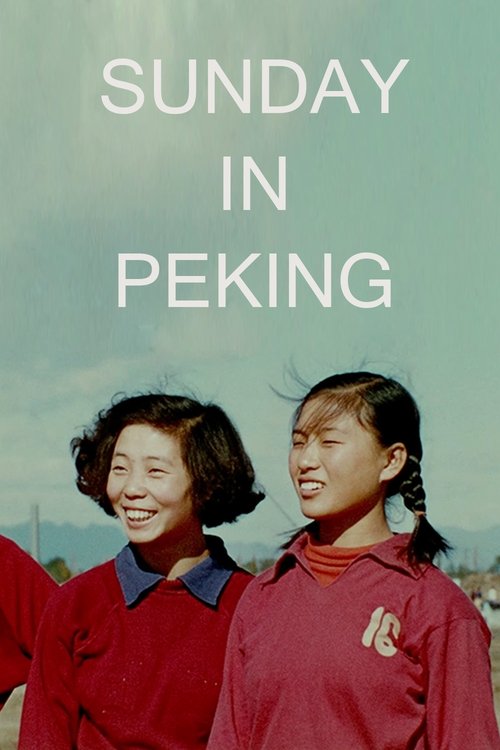
Sunday in Peking is a deep exploration of China's transition from imperial systems to a socialist state. It successfully shifts the focus from a colonialist perspective to the political ability to act of the Chinese populace. The film's main strength lies in its authentic representation of Chinese people and its critical examination of Western-centric historical narratives. By highlighting the lived experiences of the Chinese people, the film avoids the whitewashing typical of mid-century Western cinema. However, the film's primary focus is on socio-political and macro-level issues. This results in a lack of representation for LGBTQ+ identities and a limited exploration of individual gender dynamics or disability.
Category Breakdown
The film does not include any explicit LGBTQ+ characters or stories. Instead, it focuses on larger socio-political changes rather than individual queer identities.
Women are shown as active participants in society and the workforce. While they are not passive subjects, the film emphasizes collective social roles over individual gender dynamics.
The film stands out by featuring an all-Chinese cast of non-professional actors. This approach avoids stereotypes and highlights the ability to act of the Chinese people in their own history.
The work criticizes Western colonial history and portrays the move towards socialism as a break from oppressive structures. It challenges Western-centric views through a nuanced depiction of social change.
The documentary captures a wide range of socioeconomic conditions but does not focus specifically on disability. It does not center neurodivergence or physical disabilities as key themes.
Present on Screen
Limited or Absent
Official Synopsis
Chris Marker’s travel essay Sunday in Peking transforms a long-held childhood dream into a cinematic journey through Beijing. Blending documentary observation with reflective narration, Marker captures the city’s rhythms, traditions, and everyday life in mid-1950s China with his signature curiosity and lyricism.
1988

1929

1983

1927

1965

1966

1985

1978
No reviews yet. Be the first to share your thoughts on this movie!
Use the rating form above to leave a star rating and optional review.