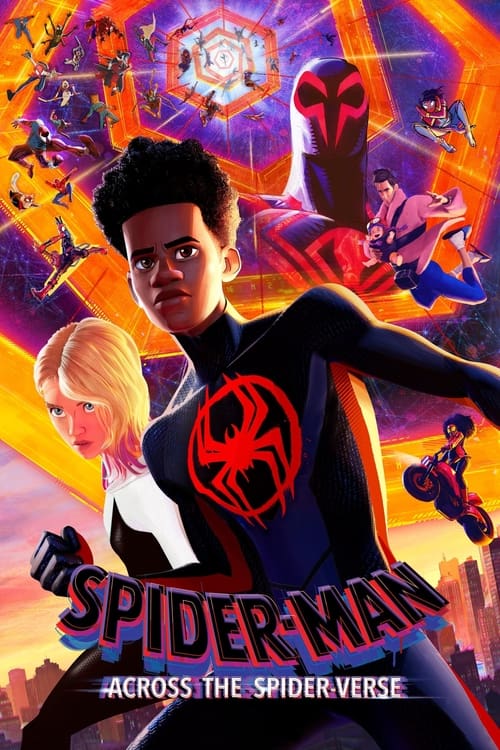
Spider-Man: Across the Spider-Verse
2023
No user ratings available yet
Representation score: 9.8 out of 10
Representation Score
Good
2018
PGDirector
Bob Persichetti, Peter Ramsey, Rodney Rothman
Runtime
117 minutes
Average Rating
No ratings yetNew Showbiz Analysis
The film argues that heroism is defined by choice and character, not by a single archetype. It centers a Black-Latino boy in a world where the default hero is white and male, explicitly inviting the audience to expand their definition of who can save the city. Traditional family structures are honored. Miles’s parents are competent, loving, and supportive, providing a stable foundation for his growth. The police are portrayed positively through his father, who is a good cop and a good dad. The narrative rejects the idea that one person or one race holds a monopoly on power. By showing multiple Spider-People from different backgrounds working together, the film suggests that identity is fluid and that anyone can step up when it matters.
Category Breakdown
No characters are explicitly identified as LGBTQ+ or in same-sex relationships. The narrative focuses on heterosexual pairings and family units without exploring queer identities. This absence leaves the category largely unaddressed on screen.
Gwen Stacy acts as a competent peer and mentor, not a passive love interest. The cast includes diverse Spider-People, normalizing female heroes alongside male counterparts. Miles’s parents are portrayed as loving, supportive, and emotionally available figures.
Miles Morales, a Black-Latino teenager, is the protagonist and primary hero. The film centers a non-white character in a world where the default hero is white. This positioning explicitly invites the audience to expand their definition of who can save the city.
Faith and religious institutions are absent from the narrative. The story relies on family dynamics and superhero action rather than spiritual or cultural rituals. Traditional family structures are honored through Miles’s supportive parents.
No characters have lasting physical or cognitive disabilities. Peter B. Parker’s weight is treated as a comedic flaw rather than a disabled life. The narrative does not explore disability as a lived experience.
Present on Screen
Limited or Absent
Official Synopsis
Struggling to find his place in the world while juggling school and family, Brooklyn teenager Miles Morales is unexpectedly bitten by a radioactive spider and develops unfathomable powers just like the one and only Spider-Man. While wrestling with the implications of his new abilities, Miles discovers a super collider created by the madman Wilson "Kingpin" Fisk, causing others from across the Spider-Verse to be inadvertently transported to his dimension.
2023

2020

2021

2022

2019

2016

2017

2008
No reviews yet. Be the first to share your thoughts on this movie!
Use the rating form above to leave a star rating and optional review.