
Deliver Me
2016
No user ratings available yet
Representation score: 5.7 out of 10
Representation Score
Minimal
2012
PGDirector
Fredrik Horn Akselsen
Runtime
83 minutes
Average Rating
No ratings yetNew Showbiz Analysis
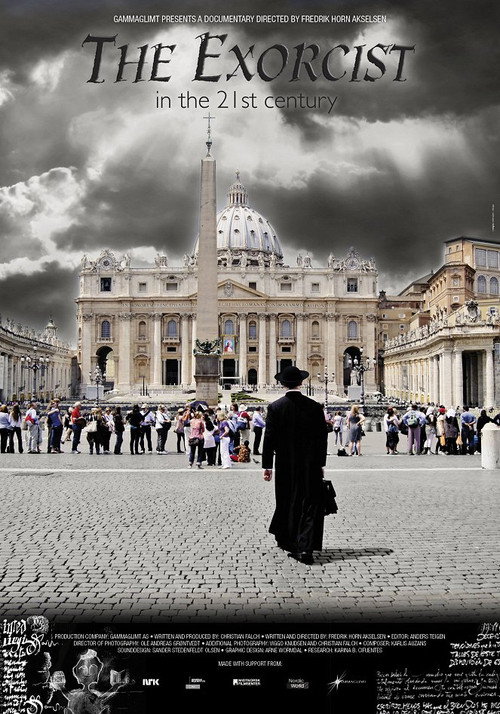
The film opens with the stark, ritualistic imagery of a Catholic exorcism, immediately establishing a world where spiritual warfare is literal and urgent. It follows Constanza, a Colombian woman claiming fifteen years of demonic possession, as she seeks help from Father José Antonio Fortea, a Vatican-approved exorcist. The documentary’s argument is straightforward: the Church’s rituals are the only effective response to genuine spiritual evil. There is no irony or distance; the camera treats the possession as real and the exorcism as necessary. The sold meaning is one of traditional authority, where faith is the sole lens for interpreting suffering. The ending reinforces this, presenting liberation through ritual as the only valid resolution. The film does not challenge the hierarchy of Church authority or the binary of good versus evil; it simply documents the process. The last image is one of spiritual release, affirming the power of the ritual and the Church’s role in it. This is a traditionalist piece, where the old default of faith as the ultimate truth is not just present but celebrated. The narrative relies on the authority of the Vatican-approved exorcist to validate the experience of the possessed woman. No external perspective or scientific alternative is introduced to complicate the spiritual framework. The camera remains a passive observer, reinforcing the internal logic of the Church’s response to evil. The film’s structure supports its central claim without deviation. Constanza’s journey is framed entirely within the context of Catholic ritual, from initial suffering to final liberation. The absence of critique or alternative interpretation ensures that the viewer accepts the Church’s framework as the only valid explanation. The final image of spiritual release serves as a definitive endorsement of the ritual’s power and the Church’s authority.
Category Breakdown
No queer characters or same-sex intimacy appear. The documentary focuses strictly on spiritual possession and ritual, leaving LGBTQ+ identities entirely absent from the narrative.
Constanza, a Colombian woman, serves as the primary subject of possession. Father Fortea holds the authoritative male role of healer, framing female suffering as the site of spiritual battle.
Constanza introduces a non-European perspective to the narrative. Her Colombian background contrasts with the European context of the exorcist, highlighting global spiritual concerns within the ritual.
Catholic doctrine and church authority form the central, unchallenged framework. Faith is presented as the sole valid lens for interpreting the supernatural, with no alternative views offered.
No physical, sensory, or cognitive disabilities are depicted or discussed. The focus remains exclusively on spiritual and psychological states attributed to demonic influence rather than medical conditions.
Present on Screen
Limited or Absent
Official Synopsis
The Exorcist in the 21st Century takes the viewer into the unknown and sinister world of exorcism in the Catholic Church. We meet one of the few exorcists in Europe, the Vatican approved José Antonio Fortea. He travels around the world on a mission to enlighten the masses about demonic possession. Constanza, a Colombian woman, is desperately looking for Fr. Forteas help. She claims to have been possessed by demons for nearly 15 years and she goes through a ritual of exorcism before she sees the Spanish exorcist as a last hope for spiritual liberation. The film follows both their journeys and gives a unique insight into one of the world most secret and mystical rites - the catholic ritual of exorcism.
2016
2018
2017
2013
2021
2013

2016
2020
No reviews yet. Be the first to share your thoughts on this movie!
Use the rating form above to leave a star rating and optional review.