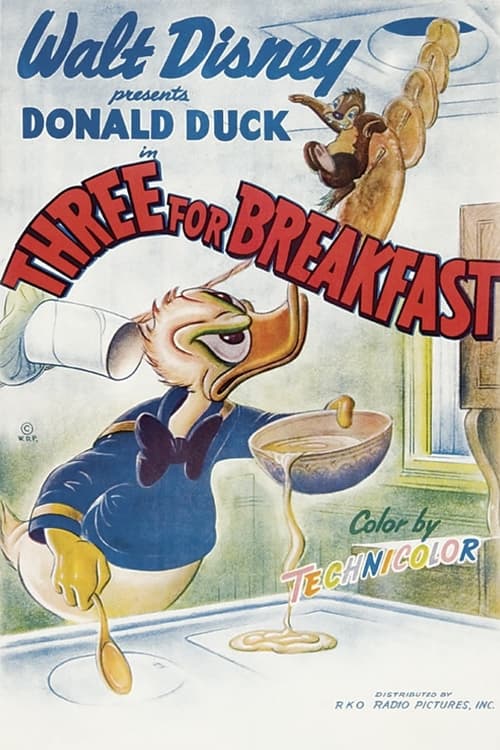
Three for Breakfast
1948
No user ratings available yet
Representation score: 0.0 out of 10
Representation Score
Minimal
1948
NRDirector
Jack Hannah
Runtime
7 minutes
Average Rating
No ratings yetNew Showbiz Analysis
This animated short focuses on slapstick comedy and domestic conflict between Donald Duck and his nephews. It is rooted in its historical context, designed to support traditional social structures and adult authority over children. The film lacks diverse character development and fails to offer complexity or subversion for underrepresented identities. Ultimately, it centers on restoring household order without critiquing established social institutions.
Category Breakdown
The film does not depict any non-straight relationships or queer narratives. Character interactions are based on traditional family roles.
The story reinforces traditional gender roles through an adult figure who acts as a disciplinarian. The power dynamic reflects a patriarchal structure where authority is maintained through punishment.
The cast includes anthropomorphic bird characters set in a closed domestic environment. The film does not address racial or ethnic diversity or use metaphorical representations of different ethnicities.
The story upholds traditional Western domestic values such as cleanliness and obedience. The nephews' mischievous actions are portrayed as disruptions to the sanctity of the family unit.
The film does not show any visible or invisible disabilities. Slapstick physical comedy, like falling from a cliff, is used for humor rather than exploring impairments or neurodivergence.
Present on Screen
Limited or Absent
Official Synopsis
Donald's nephews come to lunch filthy from playing outside. Donald sends them to wash up; when he finds they've done a half-hearted job, he sends them to bed without supper. They scheme to get food; Donald catches them, but falls off a cliff while chasing them. He's OK, but temporarily out cold. The boys build a fake corpse and dress Donald up as an angel, and he buys it for a while.
1948
1941
1951
1953
1949
1954
1951
1947
No reviews yet. Be the first to share your thoughts on this movie!
Use the rating form above to leave a star rating and optional review.