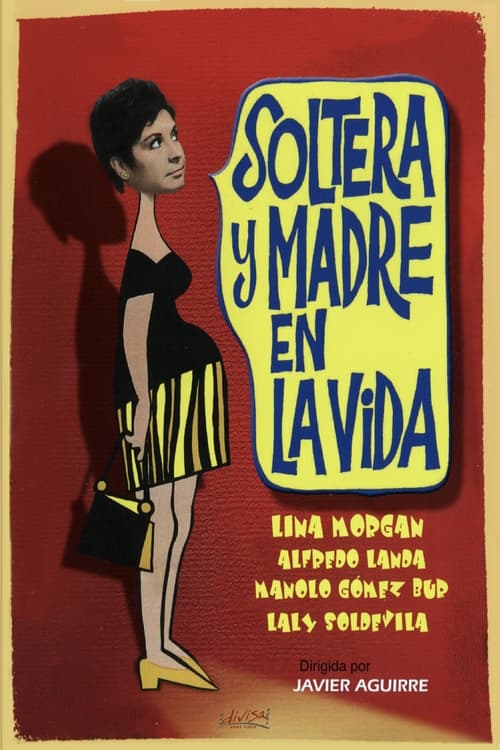
Unmarried and Mother in Life
1969
No user ratings available yet
Diversity score: 5.7 out of 10

2000
Director
Dudi Appleton
Runtime
96 minutes
Average Rating
No ratings yetSynopsis
Unimpressive, 24-year-old virgin, Eamonn (Kris Marshall) lives in Belfast with his mother, during the Troubles. Local girl, Mary Malloy (Tara O'Neil) decides that since she has probably slept with every man in town Eamonn should be next on her list. He proves to be quite a catch... and Mary gets pregnant even though she took precautions. A doctor discovers that Eamonn has a very high sperm count and, with the birth rate in Ireland decreasing, Millicent (Bronagh Gallagher) decides to hire out Eamonn to women whose husbands have been firing blanks; all with the blessing of the local Catholic church which sees it as morally better than artificial means.
Overall Score
Fair
Category Breakdown
LGBTQ+ Representation
The film focuses on heteronormative reproductive themes. While it explores unconventional sexual dynamics, it lacks explicit queer identity markers or characters.
Gender Representation
Millicent drives the plot by managing Eamonn's biological utility. This shifts power from traditional masculine leadership to a female-led social enterprise.
Racial & Ethnic Diversity
Set in Belfast during the Troubles, the story centers on a homogeneous demographic. It does not suggest a multi-ethnic or diverse cast.
Religious & Cultural Diversity
The narrative subverts religious rigidity by showing the Catholic Church sanctioning unconventional reproductive practices. It uses moral relativism to critique institutional sanctity.
Disability Representation
There is no evidence of characters with visible or invisible disabilities within the narrative.
Strengths
Areas for Improvement
AI Analysis
The film operates as a situational comedy that prioritizes the subversion of social and religious norms over broad demographic intersectionality. It finds its strength in challenging the absolute authority of traditional institutions through a pragmatic, almost transactional lens. While the story disrupts gender hierarchies by centering female agency, it remains limited by its localized, homogeneous setting. The focus on heteronormative mechanics and the lack of multi-ethnic representation results in a lower score for racial and LGBTQ+ diversity.
1969

2010

1982

1971

2004

2003
1989

2021

1977
2000
1979

2022
No reviews yet. Be the first to share your thoughts on this movie!
Use the rating form above to leave a star rating and optional review.