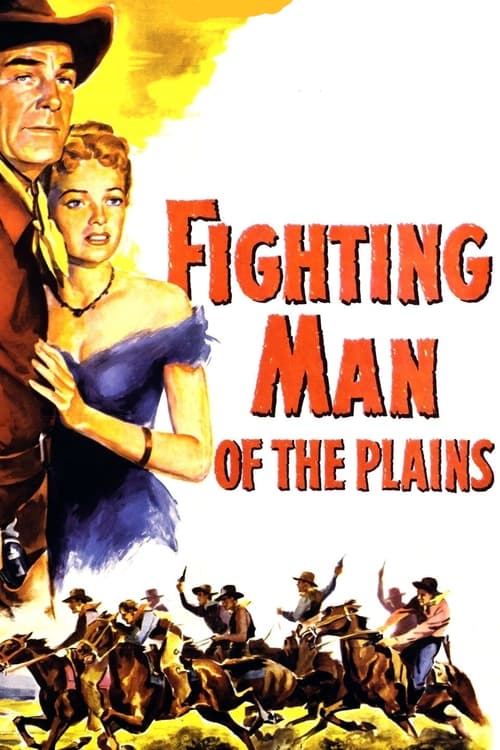
Fighting Man of the Plains
1949
No user ratings available yet
Representation score: 1.5 out of 10

Representation Score
Minimal
1947
ApprovedDirector
Ray Taylor
Runtime
69 minutes
Average Rating
No ratings yetNew Showbiz Analysis
The film opens on a sun-bleached frontier landscape, a visual promise of isolation that quickly yields to the social machinery of a small town. *Michigan Kid* sells a vision of communal restoration, where the wildness of the individual is tamed by the collective. Jon Hall’s character, a former marshal, is not the solitary hero of the genre but a man who must be absorbed into the social fabric to find peace. The camera treats this integration as the moral victory, favoring the stability of the group over the autonomy of the lone wolf. The sold meaning is clear: order is restored not through individual vengeance, but through communal action. Sue Dawson, played by Rita Johnson, is the prize that keeps the men in line, her domesticity the reward for their labor. The film’s argument is that the individual must submit to the community to find redemption. This is a traditional Western framing, where the frontier is a blank slate for white settlement and the "wild" is a moral state to be corrected. The contradictions are subtle. The film claims to value community, yet it relies on the competence of a few male leads to enforce that community’s will. The sheriff and the townspeople are the true heroes, but they need the trigger of the outsider’s violence to act. This tension between individual agency and collective authority is the film’s central conflict, resolved in favor of the latter. The last image is of the community, with Sue at its center, the gun holstered, symbolizing the end of the need for violence. The film is a product of its era, reflecting the 1940s belief in social conformity and collective responsibility. It is not a subversive text, but a straightforward affirmation of the Western code. The camera loves the community, and the ending rewards those who submit to it. The film’s argument is thin, but it is consistent, and the pictures align with the text.
Category Breakdown
No queer characters or same-sex intimacy appear. The romantic arc is strictly heterosexual, centered on the male lead and the female lead.
Sue Dawson serves as the passive moral anchor and prize, rescued by men who perform the physical labor. Her value is domestic and stabilizing; she pays no price for her inaction.
The cast is predominantly white, reflecting the era’s standard Western demographics. William Ching appears as Steve Randolph Prescott, but the narrative centers entirely on white frontier dynamics.
The film treats frontier community and communal order as the ultimate good. Individual vengeance is subordinated to collective safety, with the sheriff and townspeople restoring stability.
No characters with physical, sensory, or cognitive disabilities are depicted. The cast consists of able-bodied actors performing standard Western archetypes without any impairment as a plot point.
Present on Screen
Limited or Absent
Official Synopsis
A former U.S. marshal rescues an instant heiress from an outlaw's gang.
1949
1940
1951

1937
1929
1948
1967
1971
No reviews yet. Be the first to share your thoughts on this movie!
Use the rating form above to leave a star rating and optional review.