
Neon Genesis Evangelion: Death and Rebirth
1997
No user ratings available yet
Representation score: 7.0 out of 10

Representation Score
Excellent
1998
Director
Masayuki, Kazuya Tsurumaki, Masahiko Otsuka, Hiroyuki Ishido, Shoichi Masuo, Ken Ando, Naoyasu Habu, Tsuyoshi Kaga, Seiji Mizushima, Tensai Okamura, Akira Takamura, Tetsuya Watanabe, Minoru Ohara, Hideaki Anno, Keiichi Sugiyama
Runtime
160 minutes
Average Rating
No ratings yetNew Showbiz Analysis
Revival of Evangelion succeeds in challenging traditional genre clichés by prioritizing internal psychological landscapes over external heroism. It effectively dismantles gender hierarchies, placing women's ability to drive the story at the center of its climax while breaking down traditional masculine archetypes. However, the film remains culturally homogeneous, focusing on a specific Japanese aesthetic that lacks active engagement with racial or ethnic diversity. While it explores deep psychological themes, the lack of explicit LGBTQ+ identity centering limits its representation in that area. Ultimately, the work excels in its deconstruction of social institutions and its complex, non-idealized portrayal of mental health and neurodivergence.
Category Breakdown
The film delves into intense emotional connections that challenge traditional romantic expectations. It disrupts the assumption that everyone is straight or cisgender by emphasizing psychological intimacy over formalized identities.
Female characters play a crucial role in resolving the narrative's metaphysical conflicts. The film breaks down traditional masculine archetypes, often depicting them as emotionally fragile or paralyzed.
The production is centered in a specific Japanese cultural context, leading to a largely homogeneous cast. It focuses on existential human conditions rather than active multiculturalism or ethnic diversity.
The narrative is deeply critical of institutional authority, presenting family units and organized power as sources of trauma. It embraces moral relativism and dismantles oppressive social systems.
The story provides a raw look at neurodivergence and mental health. It integrates psychological instability into the protagonist's experience, moving away from clichés toward a realistic depiction of mental struggle.
Present on Screen
Limited or Absent
Official Synopsis
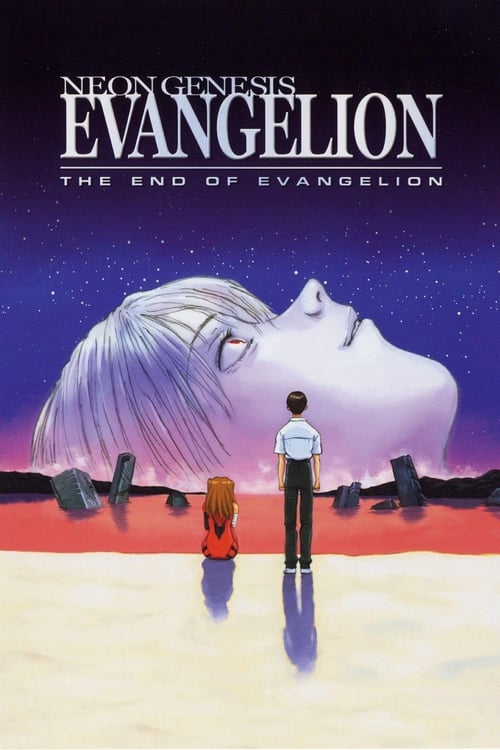
Revival of Evangelion is a re-edit of the Neon Genesis Evangelion films , released in 1998. It consists of Evangelion: Death (which was essentially a clip show that summarized the entire regular series) and The End of Evangelion , re-edited together to make a version that tells the entire story of Evangelion. It is considered to be the final form of the Evangelion films.
1997
1997

2010

2010

2026

2021

2010

2010
No reviews yet. Be the first to share your thoughts on this movie!
Use the rating form above to leave a star rating and optional review.