
Revival of Evangelion
1998
No user ratings available yet
Representation score: 8.2 out of 10
Representation Score
Good
1997
Not RatedDirector
Hideaki Anno, Kazuya Tsurumaki, Masayuki, Seiji Mizushima, Masahiko Otsuka, Hiroyuki Ishido, Shoichi Masuo, Naoyasu Habu, Tetsuya Watanabe, Minoru Ohara, Tsuyoshi Kaga, Tensai Okamura, Ken Ando, Akira Takamura, Keiichi Sugiyama
Runtime
101 minutes
Average Rating
No ratings yetNew Showbiz Analysis
The film stands out for its deconstruction of traditional social and gender norms. It dismantles stable hierarchies, whether familial, institutional, or gender-based, in favor of a fragmented, postmodern reality. It excels in providing a sophisticated exploration of psychological complexity. However, it lacks explicit demographic diversity, offering limited representation of LGBTQ+ identities or multicultural casting.
Category Breakdown
The film does not include explicit representations of LGBTQ+ identities or same-sex relationships. While psychological intimacy is a key theme, there are no clear depictions of non-straight relationships.
Female characters such as Misato Katsuragi and Rei Ayanami play crucial roles and have significant influence. The film challenges typical masculine stereotypes by showing Shinji Ikari's extreme vulnerability and emotional struggles.
The cast is primarily Japanese, reflecting a specific cultural and geographic context. The absence of diverse ethnic representation within the main cast limits the score in this area.
The narrative critiques systemic power through the dehumanizing NERV organization and explores the trauma of dysfunctional families. It focuses on existential themes rather than specific religious or moral doctrines.
The film delves into invisible disabilities, particularly neurodivergence and severe mental health issues. Psychological instability is portrayed as a core part of character identity rather than just a plot device.
Present on Screen
Limited or Absent
Official Synopsis
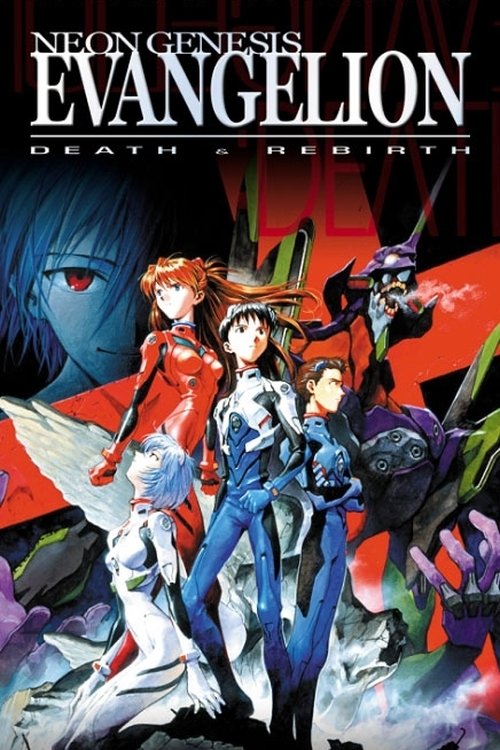
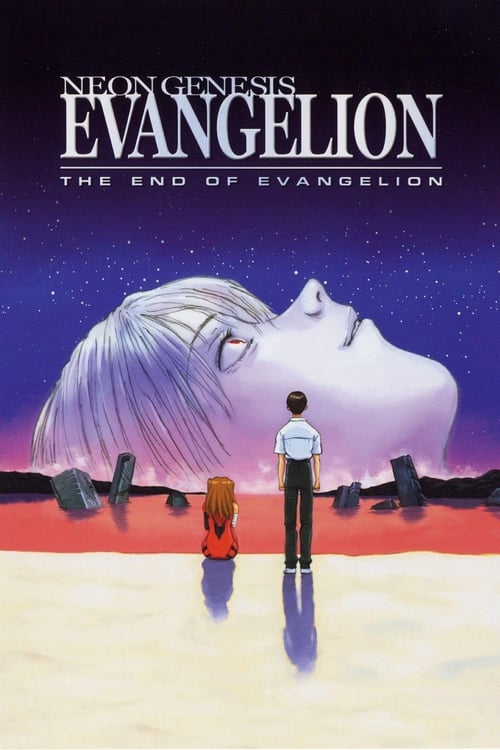
Originally a collection of clips from the Neon Genesis Evangelion TV series, Death was created as a precursor to the re-worked ending of the series. Rebirth was intended as that re-worked ending, but after production overruns Rebirth became only the first half of the first part of The End of Evangelion, with some minor differences.
1998
1997
2015
2004
2014

2015
2015
2010
No reviews yet. Be the first to share your thoughts on this movie!
Use the rating form above to leave a star rating and optional review.