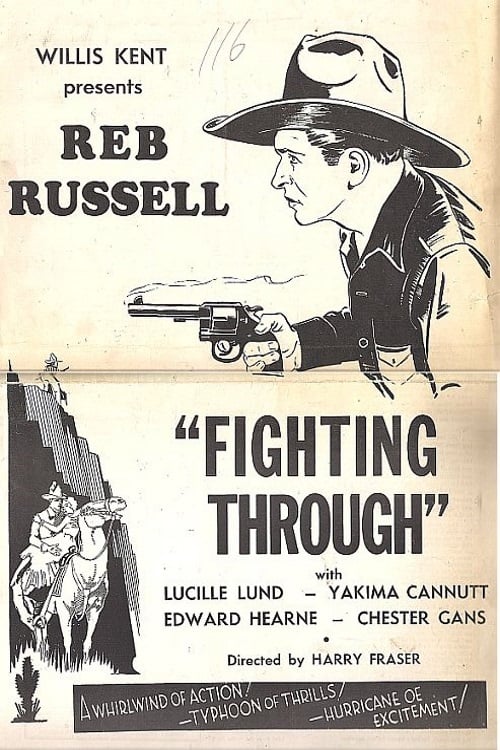
Fighting Thru
1934
No user ratings available yet
Diversity score: 2.3 out of 10

1936
PassedDirector
Harry L. Fraser
Runtime
60 minutes
Average Rating
No ratings yetSynopsis
Perrin plays a boxer whose manager takes him out to a ranch for training, but Perrin soon discovers the ranch foreman is responsible for a $100,000 jewel heist.
Overall Score
Limited
Category Breakdown
LGBTQ+ Representation
The film lacks any evidence of LGBTQ+ characters or non-heteronormative narratives. It adheres to the standard romantic and platonic structures typical of 1930s cinema.
Gender Representation
The story centers on a male boxer navigating a conflict with a ranch foreman. Female characters appear relegated to passive or supporting roles within a rigid hierarchy.
Racial & Ethnic Diversity
The production reflects the homogeneous casting standards of 1936. It likely centers on Anglo-Saxon protagonists and follows the era's tendency toward reductive tropes for non-white characters.
Religious & Cultural Diversity
The narrative reinforces conventional Western values regarding law, order, and individual heroism. It focuses on traditional morality and the protection of property rather than systemic critique.
Disability Representation
There is no information available regarding the depiction of physical or neurodivergent disabilities in this film.
Strengths
Areas for Improvement
AI Analysis
Wildcat Saunders is a product of its time, functioning as a standard 1930s Western that prioritizes genre tropes over social complexity. The narrative is built around a male protagonist's physical agency, leaving little room for diverse perspectives or intersectional storytelling. The film's structure relies on traditional hierarchies and conventional morality. It follows the era's cinematic norms, which favored Anglo-Saxon heroism and rigid gender roles, offering no significant disruption to the social status quo of the mid-1930s.
1934
1937

1933
1933
1946
1945
1935

1939
1930
1942
1950
1932
No reviews yet. Be the first to share your thoughts on this movie!
Use the rating form above to leave a star rating and optional review.