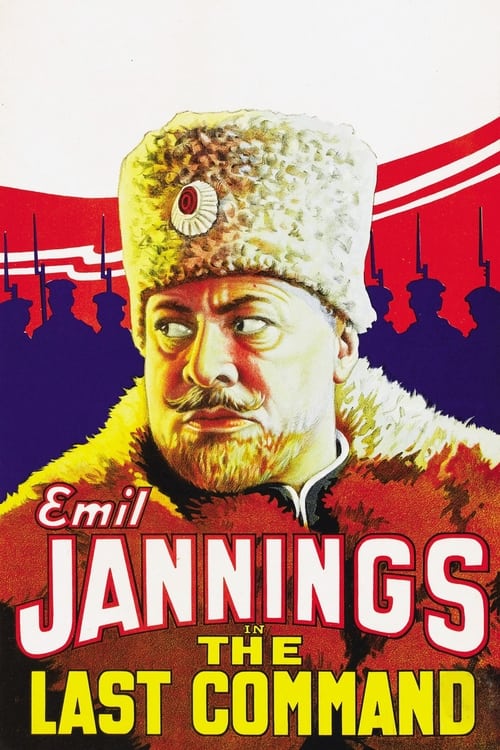
The Last Command
1928
No user ratings available yet
Representation score: 3.3 out of 10

Representation Score
Fair
1928
PassedDirector
Alfred Santell
Runtime
70 minutes
Average Rating
No ratings yetNew Showbiz Analysis
Wheel of Chance serves as a transitional melodrama that uses the immigrant experience to drive its central conflict. By focusing on a Russian family navigating the transition from Czarist Russia to the United States, the film offers more ethnic and cultural depth than many standard period dramas of the 1920s. However, the film remains constrained by the era's traditional hierarchies. The narrative structure prioritizes masculine archetypes in legal and criminal roles, while female characters are sidelined as tragic victims. This creates a lopsided representation of ability to act. Ultimately, while the film lacks modern multi-layered complexity or queer representation, its engagement with geopolitical shifts and the diaspora provides a nuanced look at social displacement.
Category Breakdown
The film does not include any explicit LGBTQ+ characters or non-straight relationships. The plot revolves around a traditional love story involving a gangster and his former girlfriend.
Men dominate the story through the District Attorney and the gangster. Women mainly serve as catalysts for the plot, such as the victim whose death drives the investigation.
The story focuses on the Turkeltaub family, a Russian immigrant group. This emphasis on an ethnic minority adapting to American life adds depth compared to typical Anglo-Saxon narratives.
The film examines the tension between the Old World and the New World. Using the Russian Revolution as a backdrop, it highlights themes of systemic change and historical displacement.
There are no visible depictions of physical or neurodivergent disabilities in the film.
Present on Screen
Limited or Absent
Official Synopsis
A Russian family, the Turkeltaubs, emigrates to the US before the Communist revolution that overthrew the Czar. One of their twin sons, Schulke, disappears and is believed dead before they leave. After they settle into their new country, the family does well: the surviving twin, Nicholai, becomes a crusading District Attorney. One of the cases he is assigned to prosecute is that of small-time gangster Jacob Talinef, who has killed a former girlfriend of Nicholai's. Further investigation of the case, though, reveals a shocking secret.
1928

1994
1936

1928
1934
1934
1967
1910
No reviews yet. Be the first to share your thoughts on this movie!
Use the rating form above to leave a star rating and optional review.