
Adiós Buenos Aires
1938
No user ratings available yet
Representation score: 2.3 out of 10
Representation Score
Fair
1952
Director
Alfonso Patiño Gómez
Runtime
100 minutes
Average Rating
No ratings yetNew Showbiz Analysis
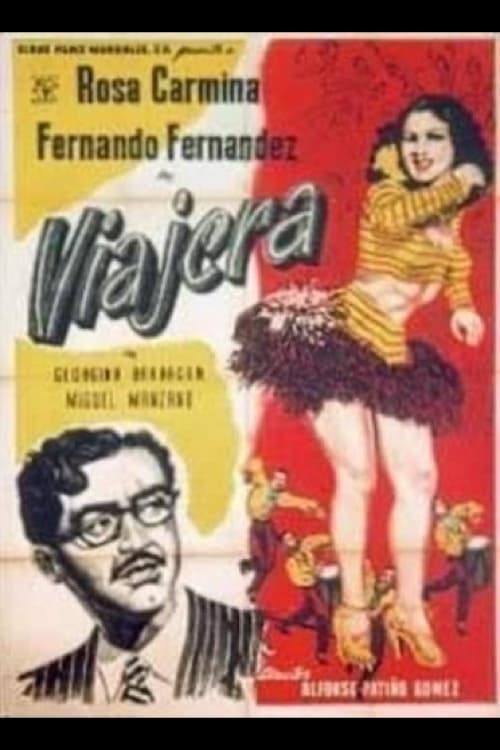
Viajera deviates from typical 1950s melodrama by focusing on a woman navigating systemic exploitation. While the film adheres to the era's traditional moral frameworks, the protagonist's professional ability to act adds complexity to the narrative. The film's strength lies in its international scope and its challenge to traditional gender roles. However, it remains confined to the era's industry standards, lacking contemporary markers of diversity or LGBTQ+ representation. Ultimately, the film serves as a transitional work in Mexican cinema, moving towards more nuanced portrayals of female mobility and moral ambiguity.
Category Breakdown
The film does not include any explicit LGBTQ+ characters or non-straight relationships. The plot revolves around the romantic tension between the female lead and the male protagonist.
Blanca Lilia is a central character with significant professional influence as a cabaret star. Her career and mobility challenge traditional male authority and domestic stereotypes.
The film expands beyond a local perspective by featuring international settings like Cuba. This cosmopolitan backdrop highlights a broader cultural context for the time period.
The story delves into the tension between respected classical institutions and transgressive cabaret culture. It examines systemic corruption through the exploitation of the protagonist.
There is no indication of the portrayal of physical or neurodivergent disabilities in this film.
Present on Screen
Limited or Absent
Official Synopsis
Music teacher gets all tangled up with a nightclub singer, after seeing his students ogling her advertisements.
1938
1949

1969

1965

1958

1958

1951
1969
No reviews yet. Be the first to share your thoughts on this movie!
Use the rating form above to leave a star rating and optional review.