
El turismo es un gran invento
1968
No user ratings available yet
Representation score: 1.1 out of 10
Representation Score
Minimal
1971
Director
Pedro Lazaga Sabater
Runtime
88 minutes
Average Rating
No ratings yetNew Showbiz Analysis
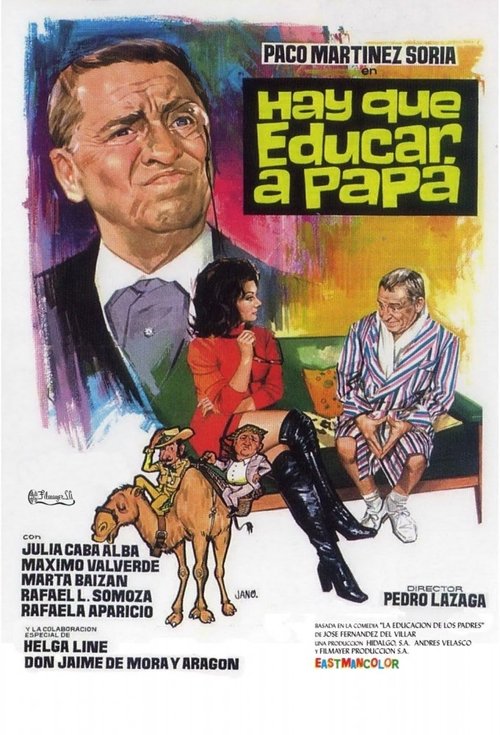
Hay que educar a papá is a traditional domestic comedy reflecting the conservative social values of 1971 Spain. The narrative is centered on established social hierarchies and the preservation of class status through marriage and sudden wealth. The film offers limited representation of diverse identities. It primarily explores class friction between newly enriched villagers and the aristocracy, reinforcing traditional patriarchal structures throughout the story. Since the film adheres to the mainstream commercial norms of its time, it lacks subversive elements or diverse character archetypes, focusing instead on a homogeneous social landscape.
Category Breakdown
The film does not include any LGBTQ+ characters. The story revolves around traditional heterosexual relationships.
The story centers on a family where the male head of the household holds significant power. A young woman drives the plot through her social climbing efforts, but the story revolves around managing the male figure.
The film depicts a homogeneous society with class distinctions between villagers and aristocrats. There is no evidence of racial or ethnic diversity among the characters.
The plot explores the tension between rural origins and aristocratic refinement. It upholds traditional social hierarchies and family values without challenging them.
There are no characters with visible or invisible disabilities featured in the central narrative.
Present on Screen
Limited or Absent
Official Synopsis
A young woman who wants to marry an earl's son wants to refine the habits of their parents, people from a village that has been enriched in the overnight by selling their land.
1968

1978

1972

1992

1951
1957
1966

1979
No reviews yet. Be the first to share your thoughts on this movie!
Use the rating form above to leave a star rating and optional review.