
Cry of the City
1948
No user ratings available yet
Representation score: 0.9 out of 10
Representation Score
Minimal
1950
ApprovedDirector
Robert Florey
Runtime
81 minutes
Average Rating
No ratings yetNew Showbiz Analysis
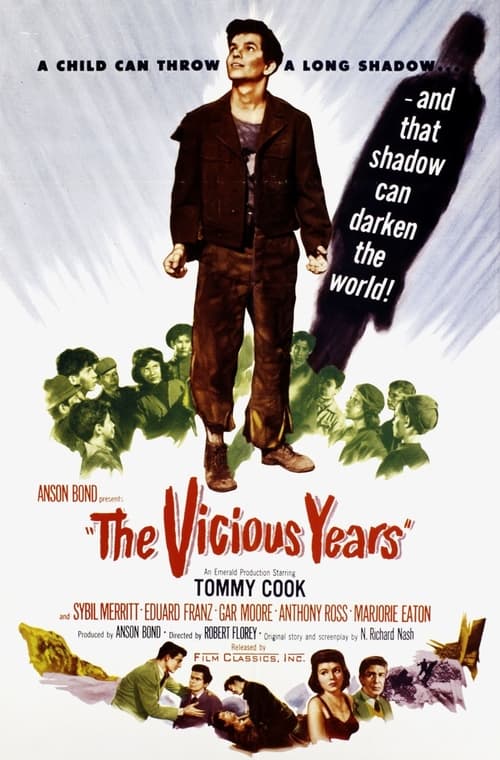
The Vicious Years functions as a typical mid-century crime drama focused on restoring domestic order. The narrative follows an outsider's integration into a traditional family structure after witnessing a crime. While the inclusion of an Italian war orphan introduces an ethnic dimension, the film upholds social expectations without disrupting them. It prioritizes individual moral choices and the preservation of the nuclear family over any deconstruction of Western institutions. Ultimately, the film adheres to the dramatic conventions of its time, emphasizing assimilation and the sanctity of the home.
Category Breakdown
The film centers on traditional family structures and does not include non-straight or non-cisgender identities. It also does not critique assumptions about straight relationships.
Female characters such as the mother and sister provide emotional support and acceptance. However, they operate within traditional family roles.
An Italian war orphan adds an ethnic dimension to the story. This character is shown through the lens of post-war displacement and assimilation, rather than a critique of power dynamics.
The plot emphasizes the pursuit of home and family life, aligning with traditional Western values of domestic stability. It does not challenge institutional structures.
The film contains no information regarding characters with visible or invisible disabilities.
Present on Screen
Limited or Absent
Official Synopsis
Mario, an Italian war orphan, sees Luca Rossi commit a murder. Eager for a home and family life, Mario promises not to tell the police if Luca takes him into his household and family. Luca fears and hates Mario, but his father, mother and sister all come to love him.
1948

1949
1958
1943
1949
1949
1950
1950
No reviews yet. Be the first to share your thoughts on this movie!
Use the rating form above to leave a star rating and optional review.