All About Eve
1950
No user ratings available yet
Representation score: 2.7 out of 10
Representation Score
Fair
1957
ApprovedDirector
Alexander Mackendrick
Runtime
97 minutes
Average Rating
No ratings yetNew Showbiz Analysis
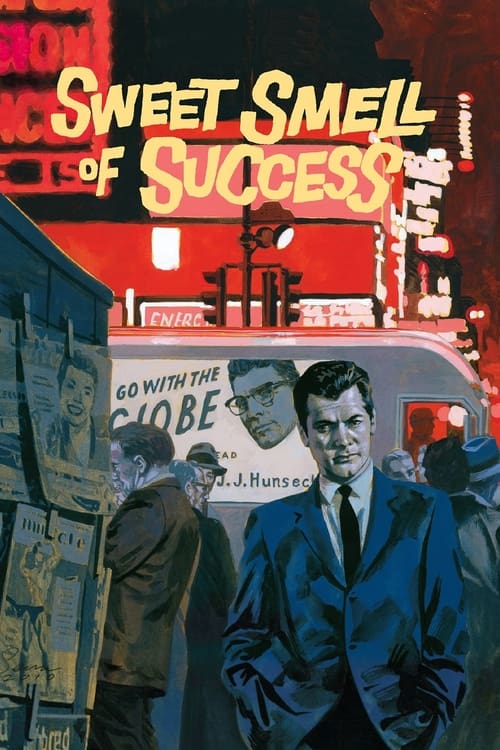
Sweet Smell of Success is a cynical, noir-style exploration of urban corruption. It effectively deconstructs Western institutions, particularly the media and capitalism, by portraying them as inherently predatory. The film's rejection of traditional moralism offers a progressive critique of systemic power structures. However, its 1950s setting limits meaningful representation of LGBTQ+ identities and features a largely homogeneous cast. Women primarily serve as catalysts for male ambitions rather than independent drivers of the plot. Overall, while the film excels in its thematic subversion of social structures, its demographic range is narrow, resulting in a low diversity score.
Category Breakdown
The film focuses on heterosexual relationships and power dynamics, with no clear representation of LGBTQ+ identities or critiques of the assumption that everyone is straight.
The story emphasizes a traditional gender hierarchy. While Susan Hunsecker exhibits strong emotions, she mainly serves as a catalyst for male actions rather than being the main driver of the plot.
The cast is predominantly uniform, reflecting the demographics of 1950s New York journalism. Although jazz culture adds atmosphere, racial diversity is not a central theme.
The film critically examines capitalism and media institutions, portraying the press and Broadway establishment as oppressive forces that demand ruthless behavior.
There are no characters with visible or invisible disabilities in the central storyline. The narrative lacks diversity in neurodivergent or physical conditions.
Present on Screen
Limited or Absent
Official Synopsis
New York City newspaper writer J.J. Hunsecker holds considerable sway over public opinion with his Broadway column, but one thing that he can't control is his younger sister, Susan, who is in a relationship with aspiring jazz guitarist Steve Dallas. Hunsecker strongly disapproves of the romance and recruits publicist Sidney Falco to find a way to split the couple, no matter how ruthless the method.
1950
1956

1976
1950
1951
1954
1963

1950
No reviews yet. Be the first to share your thoughts on this movie!
Use the rating form above to leave a star rating and optional review.