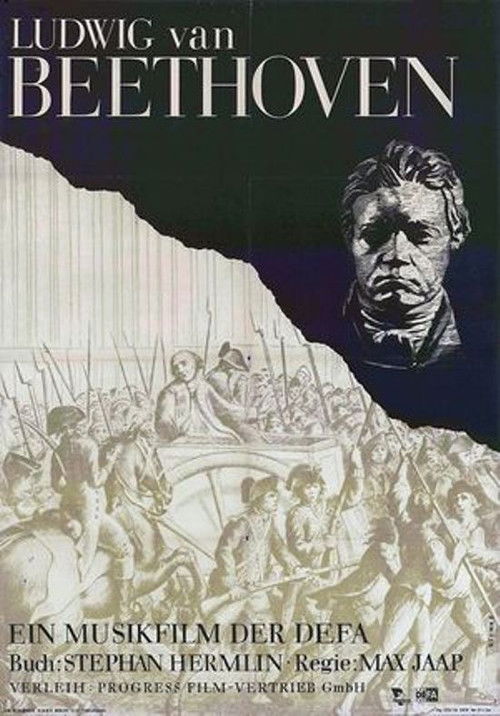
Ludwig van Beethoven
1954
No user ratings available yet
Diversity score: 4.6 out of 10

2005
GDirector
Larry Weinstein
Runtime
90 minutes
Average Rating
No ratings yetSynopsis
Beethoven's Hair traces the unlikely journey of a lock of hair cut from Beethoven's corpse and unravels the mystery of his tortured life and death. The film begins in modern times, when a pair of Beethoven enthusiasts purchase the hair at a Sotheby's auction. The story then looks at the lock's previous owners and culminates in the science that reveals Beethoven's "medical secret". Set to a lush score of some of Beethoven's most glorious music, the film explores the world of forensic testing in sharp relief against the romance of 19th-century Vienna and the horrors of 20th-century Nazi Germany.
Overall Score
Fair
Category Breakdown
LGBTQ+ Representation
The film lacks explicit evidence of LGBTQ+ characters or narratives. It focuses primarily on historical forensic inquiry and musical biography.
Gender Representation
The narrative operates within a patriarchal historical framework centered on a male figure. While forensic science offers modern perspectives, there is little evidence of female agency.
Racial & Ethnic Diversity
The subject matter is centered on Western classical music and European history. The focus remains predominantly on Anglo-European settings and historical contexts.
Religious & Cultural Diversity
The film challenges idealized Western myths by prioritizing scientific truth over romanticized legends. It provides a critical look at the corruption of Western institutions during the Nazi era.
Disability Representation
Beethoven’s physical and sensory struggles are central to the narrative. Forensic science is used to provide a nuanced, material understanding of his lived experience.
Strengths
Areas for Improvement
AI Analysis
Beethoven's Hair is a specialized documentary that prioritizes scientific deconstruction over demographic breadth. It uses a physical relic to bridge the gap between 19th-century romance and modern forensic reality. The film succeeds in humanizing a historical icon by focusing on biological vulnerability rather than mere musical genius. This approach moves away from traditional hagiography to explore systemic trauma. However, the film's scope is narrow. It remains deeply rooted in Western European history, offering limited representation for non-Western cultures or non-heteronormative identities.
1954
2014

1948

2019
2009
2009
2017
1999

2015
2008

2010
1999
No reviews yet. Be the first to share your thoughts on this movie!
Use the rating form above to leave a star rating and optional review.