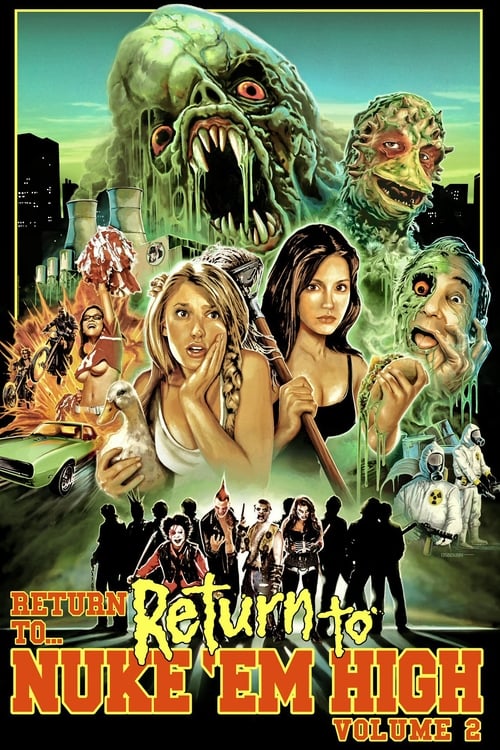
Return to... Return to Nuke 'Em High aka Vol. 2
2017
No user ratings available yet
Diversity score: 6.4 out of 10
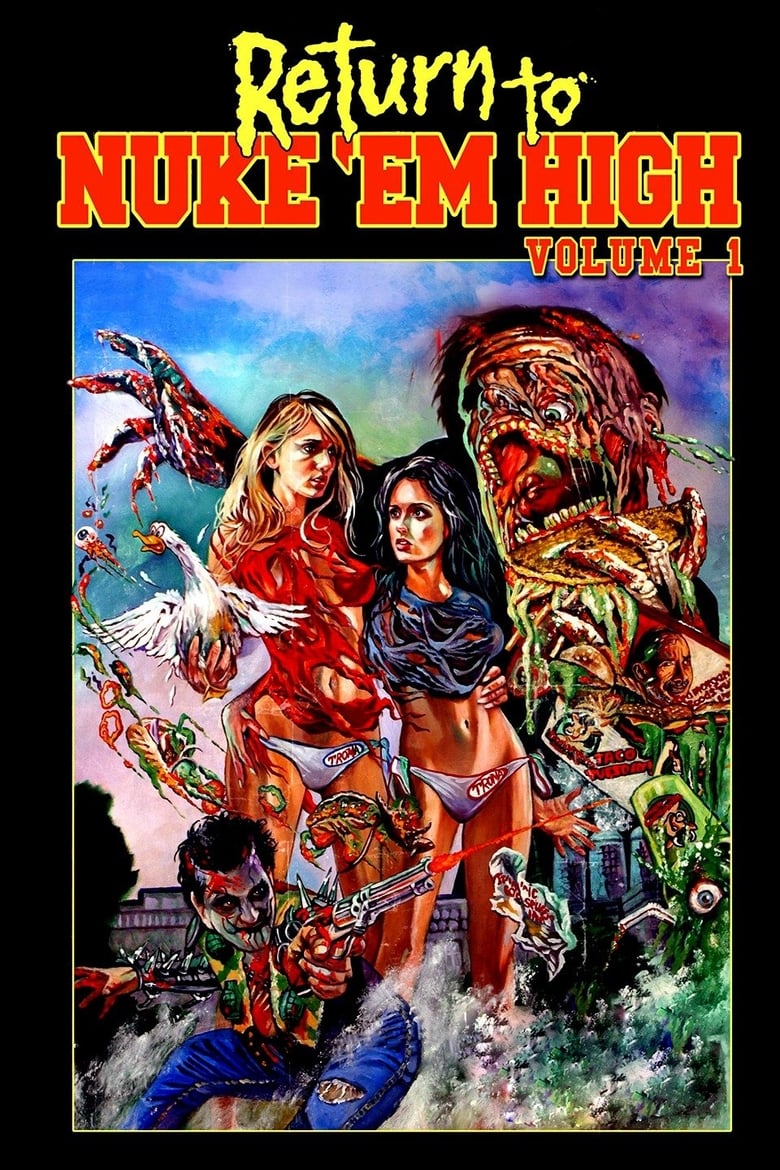
2013
Not RatedDirector
Lloyd Kaufman
Runtime
85 minutes
Average Rating
No ratings yetSynopsis
Return to the Class of Nuke 'Em High follows a young couple that are up against the school glee club. Unfortunately, the glee club has mutated into a gang called The Cretins. When the other students begin to undergo mutations, our couple must solve the mystery and save Tromaville High School
Overall Score
Fair
Category Breakdown
LGBTQ+ Representation
The story centers on a young couple within a mutated landscape. There are no explicit queer character arcs or same-sex intimacy present. The film's campy aesthetic offers stylistic proximity to queer sensibilities without formal representation.
Gender Representation
Gender roles are portrayed through hyper-stylized, absurd archetypes. Traditional masculine leadership is rendered farcical by the chaotic environment. This shifts the focus from patriarchal competence to survival-based absurdity.
Racial & Ethnic Diversity
Identity is often subsumed by mutation and survival in this wasteland setting. While the film avoids mainstream studio homogeneity, there is no prominent evidence of intentional intersectional casting or diverse character agency.
Religious & Cultural Diversity
The film excels at deconstructing Western institutions and social order. It portrays authority as corrupt or non-existent. The narrative celebrates anti-social behavior and the rejection of traditional societal norms.
Disability Representation
Mutation serves as a central metaphor for physical transformation and bodily divergence. However, these changes function as horror tropes rather than meaningful explorations of lived experience or agency.
Strengths
Areas for Improvement
AI Analysis
Lloyd Kaufman’s work functions as a postmodern critique of societal stability. The film rejects conventional social hierarchies and traditional Western cohesion in favor of chaos and moral relativism. While the narrative architecture subverts authority, it lacks formal, intersectional character development. The focus remains on genre-driven tropes like mutation and camp rather than specific identity-based representation. Ultimately, the film's strength lies in its anti-establishment stance, even if it fails to provide deep, diverse character agency.
2017
2001
2006

2020
1989
1993
1990
1984

2008

2013

1984

2017
No reviews yet. Be the first to share your thoughts on this movie!
Use the rating form above to leave a star rating and optional review.