
Dera-chan of the Southern Islands
2014
No user ratings available yet
Representation score: 5.0 out of 10
Representation Score
Limited
1982
Director
Mori Masaki
Runtime
91 minutes
Average Rating
No ratings yetNew Showbiz Analysis
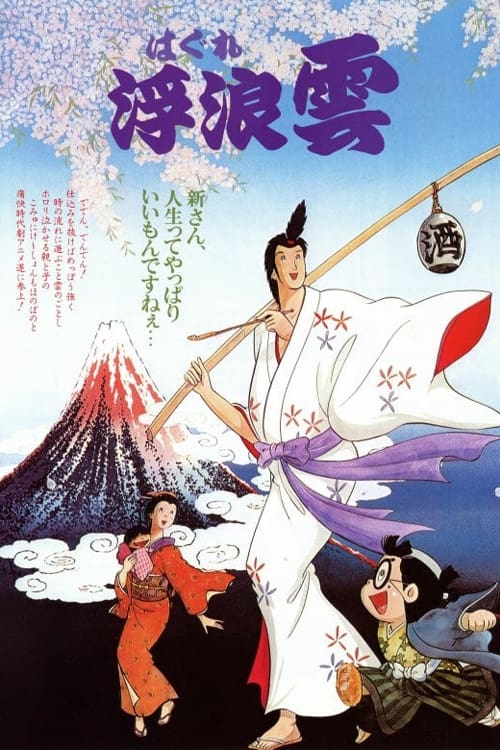
Drifting Clouds presents a traditional narrative structure set in a historically homogeneous society. The film primarily follows a conventional family unit, limiting its scope regarding diverse identity representation. However, the inclusion of a female Shinsengumi leader provides a moment of martial ability to act and professional authority, offering a subtle challenge to the era's typical gender roles. Ultimately, the film serves as a period-specific character study, adhering to mid-century storytelling patterns focused on individual pursuits rather than systemic or multi-layered social critiques.
Category Breakdown
The story revolves around a family where everyone is assumed to be straight and cisgender, with no visible LGBTQ+ identities or narratives that challenge traditional social structures.
The protagonist follows a traditional male role, but the film includes Ichimonji Hyougo, a female swordswoman with professional authority. This adds a layer of complexity to the usual gender roles.
Set in Edo-era Japan, the film portrays a homogeneous Japanese society consistent with its historical context. It avoids Western-centric casting norms and focuses on a culturally specific representation.
The film centers on a retired warrior who prioritizes personal enjoyment over civic duties. It does not engage with systemic critiques or the dismantling of societal institutions.
The narrative does not include any characters with visible or invisible disabilities. There is no representation or use of disability as a plot device.
Present on Screen
Limited or Absent
Official Synopsis
Retired samurai Kumosuke lives quietly, not to say idly, in Edo (old Tokyo) with his wife and two children, a young boy named Shinnosuke and an infant girl, Ohana. While he nominally runs a courier business to earn a living, he seems to spend most of his time smoking his pipe, drinking sake, and chasing women. The arrival of a Shinsengumi squad led by a young swordswman, Ichimonji Hyougo, disrupts this peaceful routine, forcing Kumosuke to defend himself.
2014
2010
1993
1999

1988
1989
2002
2005
No reviews yet. Be the first to share your thoughts on this movie!
Use the rating form above to leave a star rating and optional review.