News Items
1983
No user ratings available yet
Representation score: 7.7 out of 10
Representation Score
Good
1981
Director
Raymond Depardon
Runtime
97 minutes
Average Rating
No ratings yetNew Showbiz Analysis
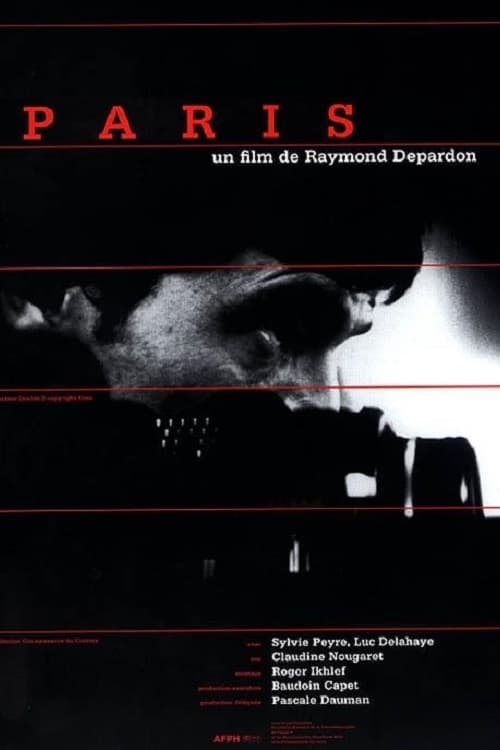
Raymond Depardon’s documentary offers a rigorous, observational look at the mechanics of press photography in 1980s Paris. It succeeds as a postmodern critique of media authority, deconstructing how images are captured and how power is performed in the public eye. However, the film lacks significant representation of diverse identities. Focusing on a niche professional subset of the Parisian elite, it reflects the socio-cultural snapshot of the era rather than challenging its demographic status quo. Ultimately, the work functions less as a vehicle for identity politics and more as a systemic study of the institutional gaze. It trades scripted drama for the mundane reality of the journalistic chase.
Category Breakdown
The film focuses on professional photography and does not explicitly center LGBTQ+ identities or narratives. It lacks overt queer-coded elements or active subversion of LGBTQ+ stereotypes.
The narrative centers on the professional sphere of 1980s Parisian photojournalism. It does not prioritize subverting gender hierarchies or elevate female intellect over male counterparts.
The film is a localized study of Parisian press culture. It focuses on the European social and political strata of the era without intentionally including diverse racial backgrounds.
Raymond Depardon disrupts conventional expectations of journalism by focusing on the mechanics of news gathering. The inclusion of labor strikes provides insight into systemic tensions and social unrest.
The documentary observes public figures and journalists. It does not use characters with disabilities as plot devices and does not center disability as a driver of the narrative.
Present on Screen
Limited or Absent
Official Synopsis
The co-founder of the Gamma press agency, Raymond Depardon, created this documentary of press photographers in Paris and their subjects by following the photographers around for one month, in October, 1980. In-between long hours waiting for a celebrity to emerge from a restaurant or a hotel, boredom immediately switches to fast action as the cameras click and roll when the person appears. The reaction to the gaggle of photographers is as varied as the people they often literally chase all around town. While some of the celebrities, such as Jacques Chirac who was mayor of Paris at the time, are perceived as comical caricatures, others are shown simply going about ordinary pursuits - including Catherine Deneuve, Gene Kelly, and Jean-Luc Godard.
1983
1961
1964
1929
1998
2010
1974
1986
No reviews yet. Be the first to share your thoughts on this movie!
Use the rating form above to leave a star rating and optional review.