
Bunker Palace Hotel
1989
No user ratings available yet
Diversity score: 5.6 out of 10
1967
Director
George Lucas
Runtime
15 minutes
Average Rating
No ratings yetSynopsis
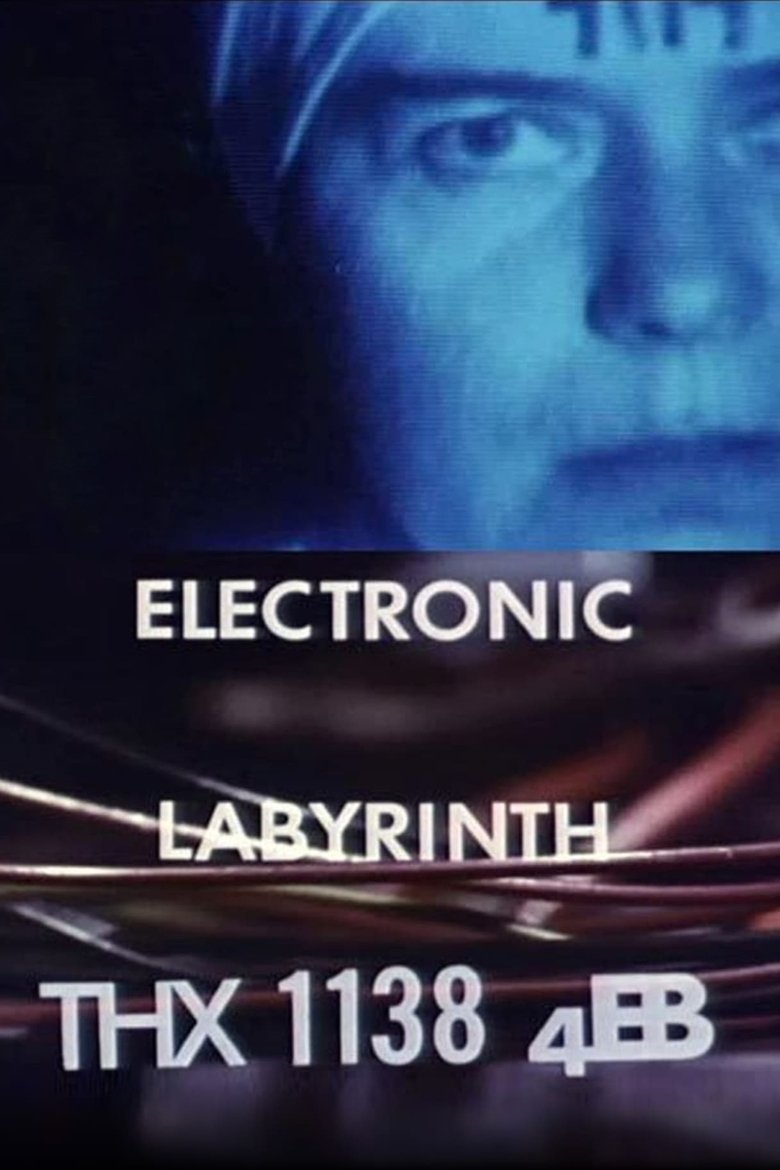
In an underground city in a dystopian future, the protagonist, whose name is "THX 1138 4EB", is shown running through passageways and enclosed spaces. It is soon discovered that THX is escaping his community. The government uses computers and cameras to track down THX and attempt to stop him; however, they fail. He escapes by breaking through a door and runs off into the sunset. The government sends their condolences to YYO 7117, THX's mate, claiming that THX has destroyed himself. Electronic Labyrinth: THX-1138 4EB is a 1967 science fiction short film written and directed by George Lucas while he attended the University of Southern California's film school.
Overall Score
Fair
Category Breakdown
LGBTQ+ Representation
The film depicts a landscape where heteronormativity is a regulated biological function rather than a social preference. The state's suppression of libido effectively erases the possibility of non-normative sexual expression.
Gender Representation
Characters are stripped of traditional gendered social roles, with masculinity and femininity subordinated to alphanumeric designations. This framing critiques the nuclear family as a tool of state control.
Racial & Ethnic Diversity
A monochromatic, uniform aesthetic results in a cast lacking visible racial or ethnic distinction. This visual homogeneity serves to illustrate the loss of individual identity within a technocratic regime.
Religious & Cultural Diversity
The narrative excels in critiquing institutional power by replacing traditional pillars like religion and family with technological authority. It frames the protagonist's flight as a reclamation of humanity.
Disability Representation
The film explores a form of systemic cognitive suppression through the use of drugs to regulate emotion. This forced modification of the psyche functions as a way to eliminate human passion.
Strengths
Areas for Improvement
AI Analysis
George Lucas's debut is a study in dehumanization, where diversity is intentionally minimized to serve a dystopian theme. The film's low demographic scores reflect a world designed to erase individual identity through uniformity and surveillance. However, the work is thematically sophisticated. It uses its sterile environment to critique how systemic authority suppresses biological drives, gender roles, and personal autonomy, offering a profound look at anti-authoritarianism. Ultimately, the film trades visible representation for a deep, conceptual exploration of how totalitarianism erodes the very foundations of human diversity.
1989

1986

1988

1963
1984

1981

1996

1987

1979

2008

1967
1986
No reviews yet. Be the first to share your thoughts on this movie!
Use the rating form above to leave a star rating and optional review.