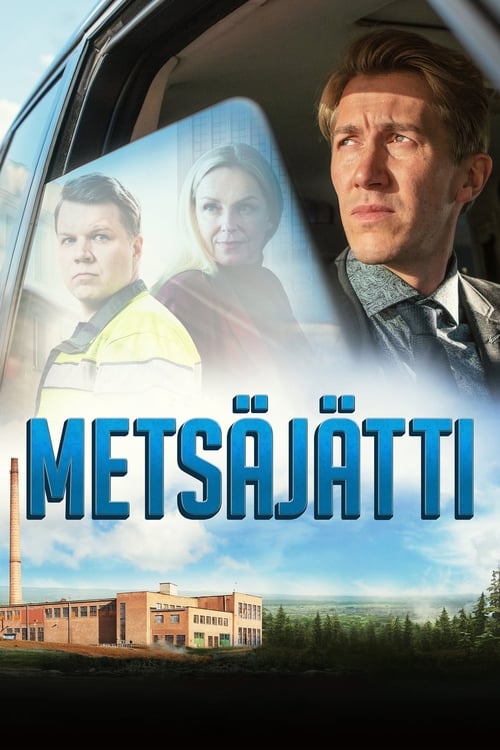
Forest Giant
2020
No user ratings available yet
Diversity score: 4.8 out of 10

2004
Director
Eugenio Cappuccio
Runtime
96 minutes
Average Rating
No ratings yetSynopsis
A well-liked employee in a multinational firm, formerly working on peers' motivation and professional training, is given the task to fire 25 of his colleagues. Stress and changes in his life ensue.
Overall Score
Fair
Category Breakdown
LGBTQ+ Representation
The film lacks explicit evidence of queer-coded narratives or critiques of heteronormativity. The focus remains on professional alienation rather than specific romantic subplots or identity-based dynamics.
Gender Representation
The drama explores how gendered expectations of empathy are challenged by institutional coldness. It deconstructs professional hierarchies through the tension between individual morality and corporate mandates.
Racial & Ethnic Diversity
The setting reflects mid-2000s European demographic realities within a multinational firm. It is unclear if the film utilizes diverse ensembles to critique social hierarchies or racial structures.
Religious & Cultural Diversity
The narrative critiques Western institutional structures by portraying the corporate entity as a destabilizing force. It examines how capitalism disrupts family and social cohesion.
Disability Representation
There is no evidence that neurodivergence, physical disability, or mental health conditions serve as central narrative drivers or primary character elements.
Strengths
Areas for Improvement
AI Analysis
The film functions primarily as a psychological critique of corporate structures and the erosion of communal bonds. It prioritizes the deconstruction of systemic stability over overt identity-based representation, focusing on the toll of late-stage capitalism on the individual. While the narrative offers a sophisticated commentary on how institutional efficiency corrupts personal morality, it lacks explicit intersectional markers. The story centers on a protagonist forced into systemic complicity, making the workplace the primary site of conflict. Ultimately, the work explores the pressures of modern Western life through a professional lens rather than a diverse social one. It examines the sacrifice of empathy for the sake of multinational corporate interests.
2020

2007

2017

1993

2011

1994

2004
2009

2020

2014

2021

1999
No reviews yet. Be the first to share your thoughts on this movie!
Use the rating form above to leave a star rating and optional review.