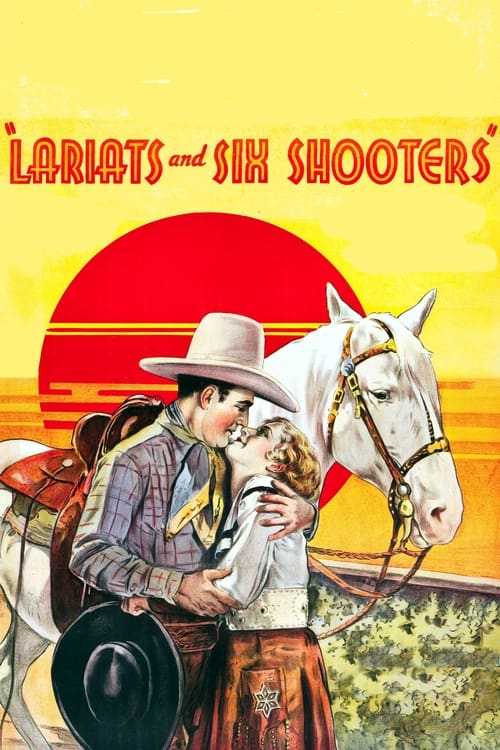
Lariats and Six-Shooters
1931
No user ratings available yet
Diversity score: 2.6 out of 10

1938
ApprovedDirector
Alan James
Runtime
57 minutes
Average Rating
No ratings yetSynopsis
Tim Hart (Tim McCoy), a former Texas Ranger, comes out of retirement to avenge the death of Lightnin' Ed (Frank LaRue), his foster father, who had been sent to Rainbow's End, to investigate a series of train robberies. He senses that George Johnson (Walter McGrail) and his henchman, Speck (Bob Kortman), head the robbery gang, especially after Speck makes an ambush attempt on his life.
Overall Score
Limited
Category Breakdown
LGBTQ+ Representation
The film centers on a traditional masculine journey of vengeance and justice. It functions within the standard heteronormative framework of 1930s action cinema.
Gender Representation
The narrative is built around the Texas Ranger archetype, emphasizing masculine leadership and physical prowess. Female characters appear to be relegated to passive or domestic roles.
Racial & Ethnic Diversity
The story focuses on Anglo-American archetypes typical of the era. There is no evidence of diverse casting or non-white protagonists with high agency.
Religious & Cultural Diversity
The film follows a traditional Western moral structure of law versus crime. It reinforces established institutional values rather than deconstructing social structures.
Disability Representation
The film provides no information regarding the depiction of physical or mental disabilities.
Strengths
Areas for Improvement
AI Analysis
West of Rainbow's End is a conventional 1938 Western that adheres strictly to the genre tropes of its time. The plot follows a retired Texas Ranger seeking vengeance, a narrative structure that prioritizes traditional masculine archetypes and clear-cut morality. The film reinforces established social hierarchies and lacks any significant demographic breadth. It operates within a homogeneous framework, focusing on Anglo-American characters and standard hero-versus-villain dynamics common to B-movie Westerns of the Golden Age. Ultimately, the production serves to uphold the status quo of the era. It offers no narrative complexity or intentionality to challenge the social or cultural norms of the late 1930s.
1931

1957

1934
1935
1939
1934
1953
1930
1936
No reviews yet. Be the first to share your thoughts on this movie!
Use the rating form above to leave a star rating and optional review.