Find another title
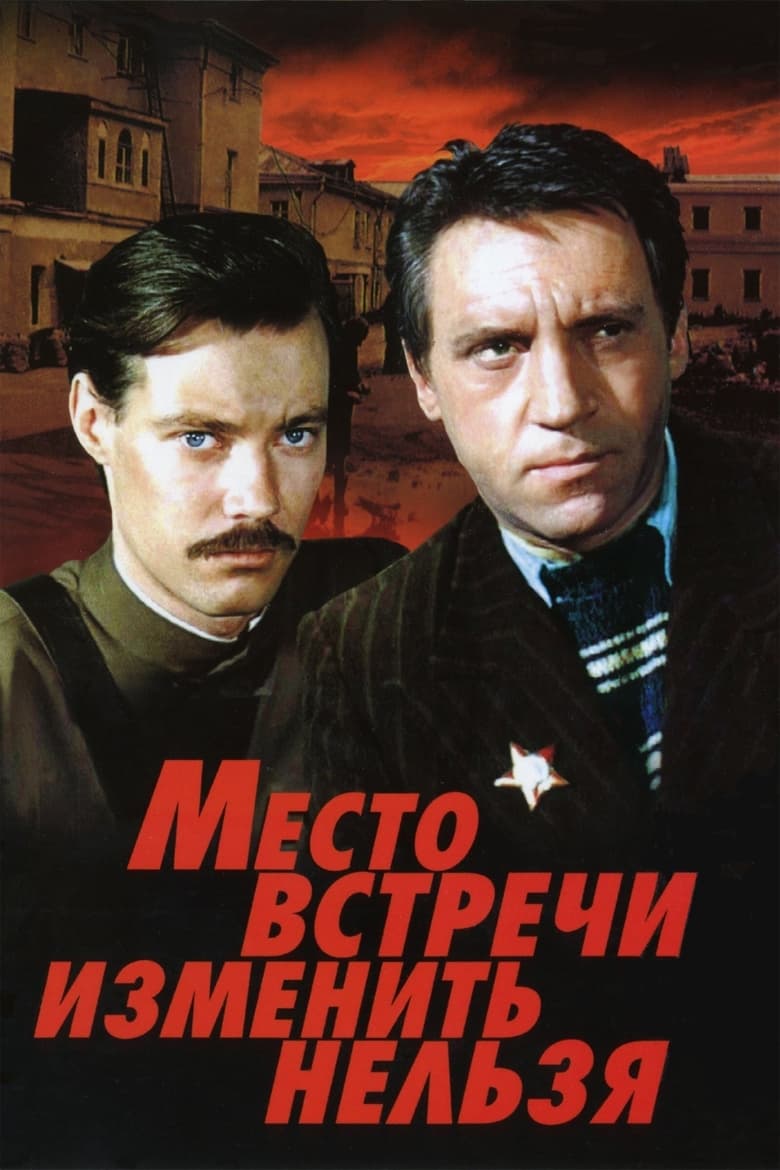
The Meeting Place Cannot Be Changed
1979
Director
Stanislav Govorukhin
Runtime
359 minutes
Average Rating
No ratings yetSynopsis
Summer of 1945. The salute of the Great Victory died down and the country is gradually returning to peaceful life. From "fire yes into the fire" a young reconnaissance commander Volodya Sharapov falls, having come to the MUR for distribution, to the department for combating banditry. In the city the Black Cat gang rages, terrifying Muscovites. Captain Gleb Zheglov enters the fray with the bandits, for whom Sharapov soon becomes his right hand.
Where to Watch
Diversity & Representation
Overall Score
Limited
Category Breakdown
LGBTQ+ Representation
The film contains no LGBTQ+ characters or non-heteronormative identities. The social landscape remains strictly aligned with mid-20th-century Soviet structures, focusing on heteronormative professional and familial bonds.
Gender Representation
Male protagonists drive the plot through investigative and paramilitary action. Female characters are largely relegated to supporting roles, often serving as witnesses or figures within the domestic sphere.
Racial & Ethnic Diversity
The cast reflects the multi-ethnic demographic reality of the 1940s Soviet Union. However, the narrative focus remains centered on the Slavic-majority urban experience, lacking agency for non-Slavic groups.
Religious & Cultural Diversity
The story prioritizes state authority and institutional order over individualistic themes. Justice is framed as an objective necessity of the state rather than a subjective or situational ethical choice.
Disability Representation
Representation is minimal and primarily serves to illustrate the physical toll of wartime conditions. There are no neurodivergent characters or individuals with disabilities possessing central agency.
Strengths
- Provides an authentic depiction of the demographic reality and multi-ethnic citizenry of the 1940s Soviet Union.
Areas for Improvement
- The narrative lacks agency for non-Slavic ethnic groups and relegates female characters to supporting roles.
- The film adheres to traditional gender hierarchies and lacks representation of neurodivergent individuals or empowered characters with disabilities.
AI Analysis
The film is a period-specific work that reinforces traditional social hierarchies and the primacy of state institutions. It functions as a celebration of the state's ability to restore stability through decisive enforcement. While the production provides an authentic depiction of the era's social constraints, it lacks the intentionality to disrupt conventional tropes. The narrative architecture is designed to uphold the existing order rather than challenge it.
Rate this Movie
Reviews
No reviews yet. Be the first to share your thoughts on this movie!
Use the rating form above to leave a star rating and optional review.