
François Truffaut, une autobiographie
2004
No user ratings available yet
Representation score: 4.4 out of 10
Representation Score
Fair
2011
Director
Claude Lelouch
Runtime
104 minutes
Average Rating
No ratings yetNew Showbiz Analysis
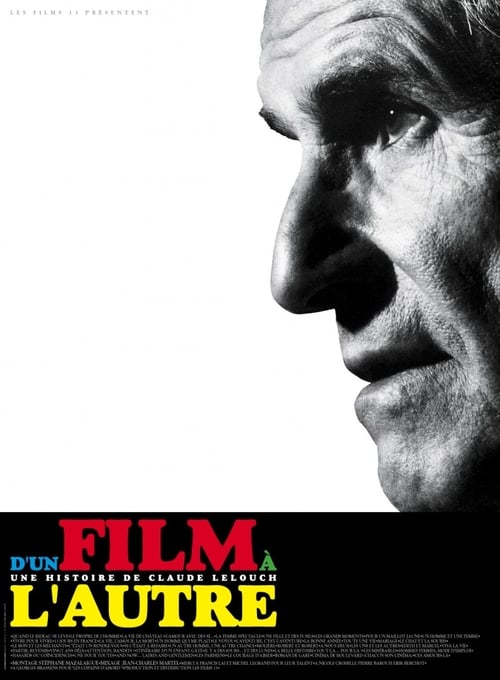
D'un film à l'autre serves as a celebratory biographical survey of Claude Lelouch's fifty-year career. It functions more as a cinematic meditation on the act of creation than a targeted study of identity politics. The film highlights emotional autonomy and the fluidity of human connections. It moves beyond rigid storytelling to emphasize the subjective nature of the cinematic image and individualistic narratives. However, the work is limited by its historical context. The retrospective reflects the Eurocentric casting and traditional romantic structures prevalent in much of the mid-20th-century French cinema it archives.
Category Breakdown
The anthology explores unconventional romantic structures and fluid emotional bonds through various film excerpts. However, it lacks a focused narrative on queer identity, treating intimacy as a broad spectrum of human experiences.
Lelouch’s work frequently features women as central, intellectually driving forces with significant emotional autonomy. The retrospective highlights a pattern of complex female characters, even when navigating traditional romantic clichés.
The film primarily showcases a Eurocentric cinematic history reflecting mid-to-late 20th-century casting trends. While capturing evolving social textures in France, it lacks an explicit focus on multi-layered racial narratives.
The documentary adopts a postmodern, impressionistic view of truth through a secular, humanist lens. It prioritizes personal expression and the subjective nature of storytelling over institutional or religious dogma.
There is no evidence within the film's retrospective focus to determine the portrayal of disability. The narrative centers on cinematic technique and the director's personal legacy.
Present on Screen
Limited or Absent
Official Synopsis
On April 13, 2011, Les Films 13 production company turned 50. How can one celebrate an anniversary of this sort ? By simply making "another" film that would sum up all the earlier ones. D'un film à l'autre is hence a kind of anthology of the films produced Les Films 13 since the 1960s (short and feature films written and directed for the main part by Claude Lelouch), a best-of of half a century of cinema, going from Le Propre de l'homme to What Love May Bring. A biography in images of a filmmaker as admired as he is criticized. In reality, D'un film à l'autre is more than a series of film excerpts, interviews, and making-of documents (some of which possess an undeniable historical value, like that from A Man and A Woman, or the final performances of Patrick Dewaere).
2004
2008
2016

1977
2013
2016
2005
2013
No reviews yet. Be the first to share your thoughts on this movie!
Use the rating form above to leave a star rating and optional review.