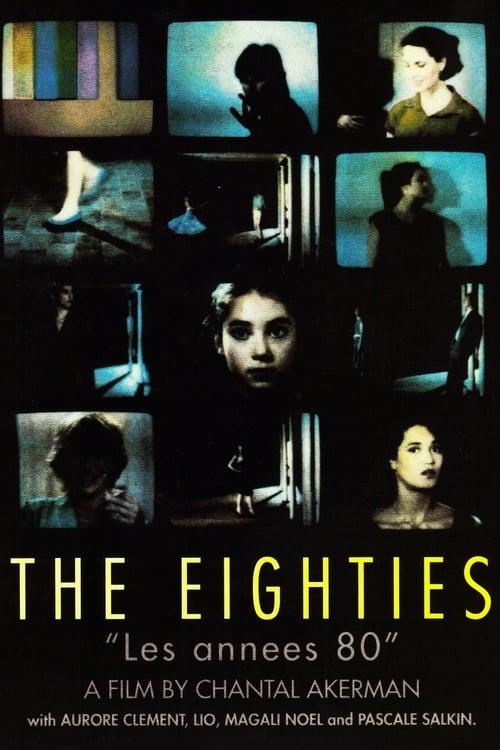
The Eighties
1985
No user ratings available yet
Diversity score: 5.7 out of 10
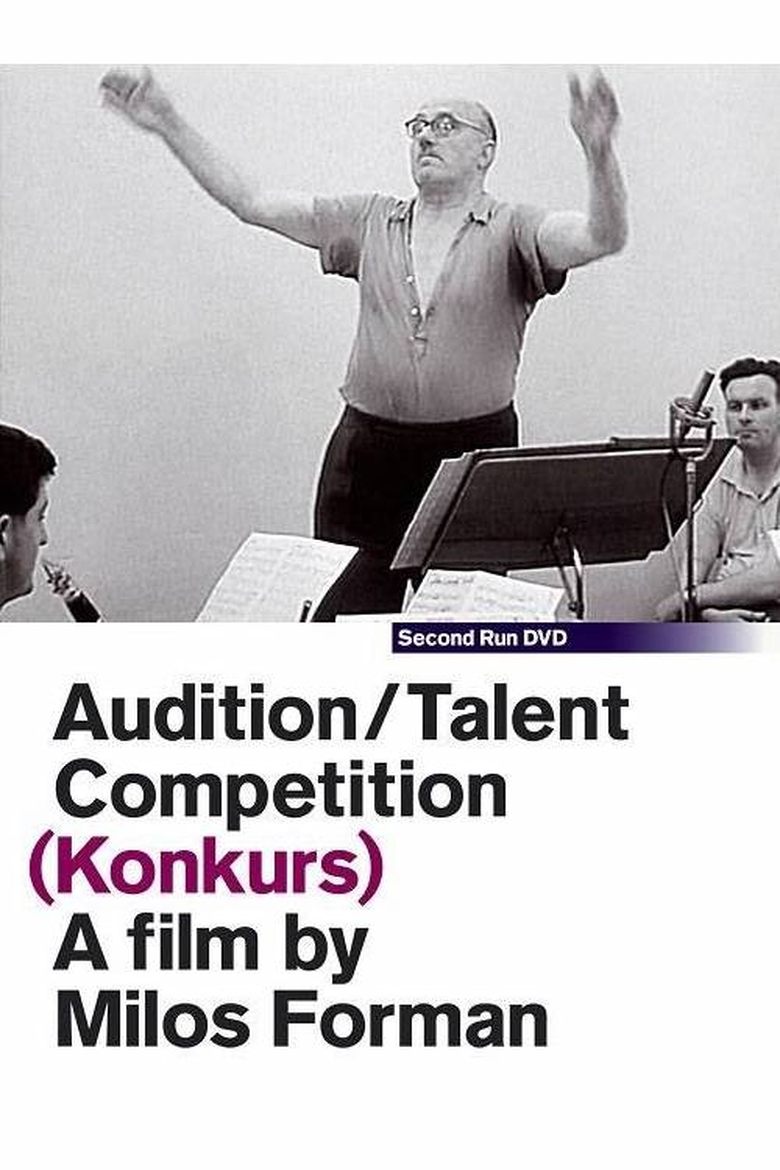
1964
Director
Miloš Forman
Runtime
79 minutes
Average Rating
No ratings yetSynopsis
Two closely related episodes. Youths make problems for two local orchestras about to compete nationally, and in a talent competition a young girl gets stage fright, while another lies to her boss to compete.
Overall Score
Fair
Category Breakdown
LGBTQ+ Representation
The film offers no explicit evidence of queer narratives or non-heteronormative identities. It appears to reflect the prevailing social norms of 1960s Czechoslovakia.
Gender Representation
Female agency is highlighted through character studies of women navigating stage fright and professional deception. These portrayals focus on individual agency within competitive structures.
Racial & Ethnic Diversity
The documentary captures a culturally homogeneous population consistent with its 1964 Czechoslovakian setting. There is no evidence of a multi-ethnic cast or intentional racial blending.
Religious & Cultural Diversity
The film utilizes observational realism to critique social structures and institutional competitions. It emphasizes humanistic morality over state-sanctioned didacticism through its naturalistic lens.
Disability Representation
While the film explores psychological states like stage fright, it is unclear if these are framed as clinical disabilities. No specific depictions of neurodivergence are confirmed.
Strengths
Areas for Improvement
AI Analysis
Miloš Forman’s documentary captures the social friction of a musical talent competition through a lens of observational realism. The film succeeds in providing nuanced character studies, particularly regarding female agency and the psychological pressures of performance. However, the work is limited by its historical and geographic context. As a product of 1960s Czechoslovakia, it reflects a culturally homogeneous society with little to no racial or LGBTQ+ representation. Ultimately, the film functions as a piece of social documentation. It prioritizes humanistic, naturalistic interactions over the intersectional diversity expected in modern progressive frameworks.
1985
1971

2014
2014
2001
2018
1994
1966
2004
2006

2017
2013
No reviews yet. Be the first to share your thoughts on this movie!
Use the rating form above to leave a star rating and optional review.