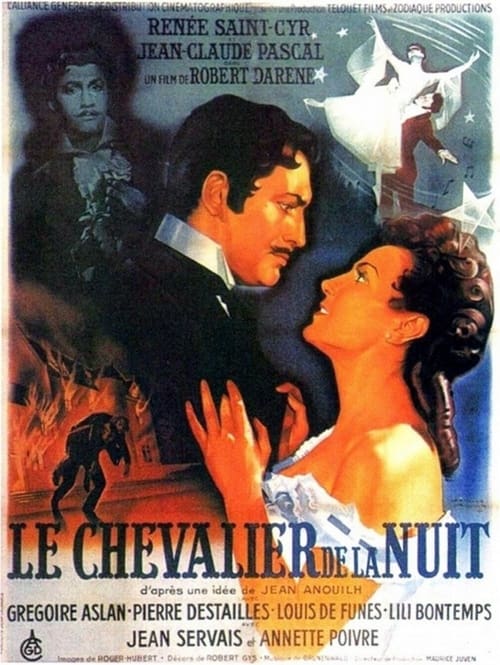
The Knight of the Night
1953
No user ratings available yet
Diversity score: 2.3 out of 10

1935
NRDirector
Harry Lachman
Runtime
89 minutes
Average Rating
No ratings yetSynopsis
A carny builds a gambling empire at the expense of his family's wellbeing.
Overall Score
Minimal
Category Breakdown
LGBTQ+ Representation
The film follows a conventional romantic trajectory centered on the poet’s longing for Beatrice. There are no depictions of non-cisnormative identities or same-sex intimacy.
Gender Representation
The narrative operates within traditional hierarchies. Beatrice functions primarily as an idealized muse and a catalyst for the male protagonist rather than an independent agent.
Racial & Ethnic Diversity
The cast is predominantly white and European, reflecting the historical setting of Medieval Italy. The film does not present a multicultural landscape or diverse casting.
Religious & Cultural Diversity
The story is deeply rooted in the religious and political structures of historical Florence. It focuses on spiritual frameworks and classical romanticism rather than secular critiques.
Disability Representation
There is no discernible representation of physical, sensory, or neurodivergent disabilities. No characters utilize disability as a central narrative element or tool for agency.
Strengths
Areas for Improvement
AI Analysis
Dante's Inferno (1935) is a period drama that adheres strictly to the social and narrative hierarchies of its era. The film focuses on classical themes of romantic longing and individual artistic pursuit, offering little disruption to traditional Western storytelling tropes. The production maintains a homogeneous demographic profile, reflecting the historical context of Medieval Italy and the cinematic conventions of the 1930s. It lacks intersectional complexity, prioritizing the protagonist's internal struggle over diverse perspectives. Ultimately, the film reinforces conventional gender roles and traditional religious frameworks, presenting a narrative that is culturally specific but demographically narrow.
No reviews yet. Be the first to share your thoughts on this movie!
Use the rating form above to leave a star rating and optional review.