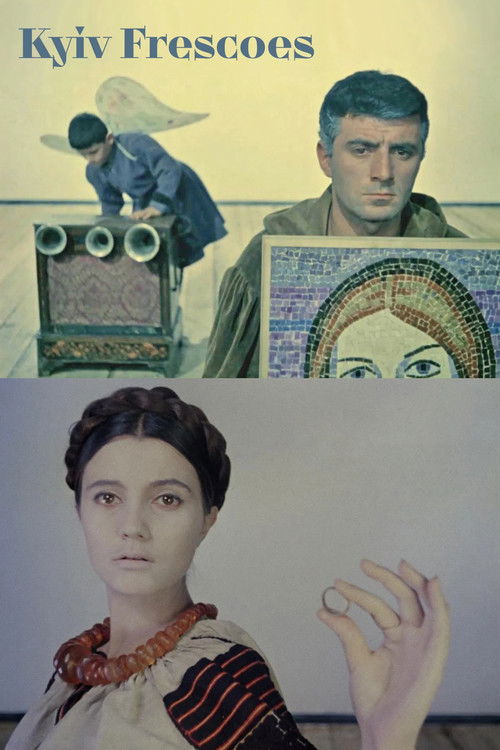
Kyiv Frescoes
1966
No user ratings available yet
Representation score: 4.4 out of 10
Representation Score
Good
1990
Director
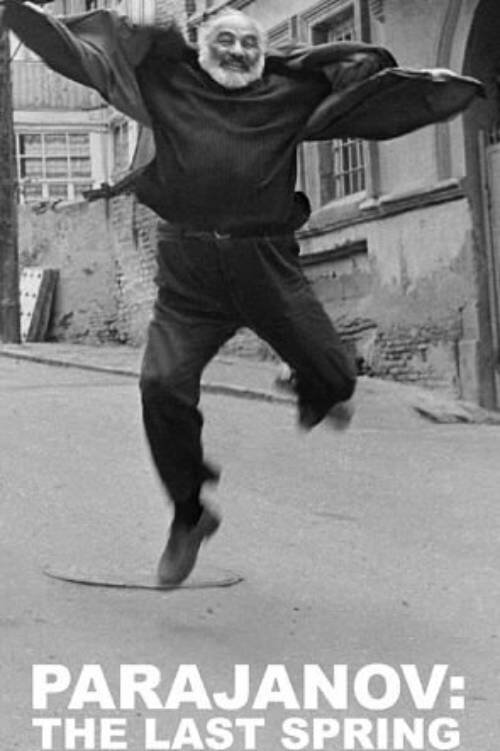
Sergei Parajanov
Runtime
9 minutes
Average Rating
No ratings yetNew Showbiz Analysis
The Confession is a deeply personal, semi-autobiographical project that centers on the creator's multi-layered identity. By focusing on Georgian heritage and the complexities of life within an imperial framework, the work inherently challenges dominant Western-centric narratives. While the film remains unfinished, the screenplay's thematic focus on personal struggle against systemic forces suggests a sophisticated approach to identity. It seeks to replace institutional history with a poetic, subjective truth. However, the lack of a completed filmic record limits a full evaluation of specific character roles and on-screen representation.
Category Breakdown
The screenplay hints at a narrative structure that goes beyond the assumption that everyone is straight or cisgender. Parajanov’s reputation for exploring human connections poetically suggests a departure from traditional representations of identity.
The film serves as a memory of personal relationships. It likely disrupts conventional gender hierarchies through poetic abstraction rather than traditional character archetypes.
The work is fundamentally centered around Caucasian identities, particularly Georgian. It prioritizes regional, non-Western perspectives and focuses on the lived experiences of a minority subject.
The narrative critiques systemic oppression and institutional authority. It prioritizes subjective, fantasist truth over state-sanctioned historical narratives and the Soviet apparatus.
There is no evidence to suggest that neurodivergence or physical disabilities are central themes or character drivers in this work.
Present on Screen
Limited or Absent
Official Synopsis
The Confession (1990) survives in Parajanov: The Last Spring (1992) in its original camera negative. It remained unfinished due to the death of Sergei Parajanov. The Confession (1990) was his favorite screenplay, which was written in the 1960s and was his film-memory of the childhood, student years, marriage, imprisonment and more as the fantasist Parajanov perceived it. Parajanov gifted the screenplay to Mikhail Vartanov, made a drawing on the cover and wrote: "The Confession will only be made by a director born in 1924 in Tiflis, Georgia." He predicted that he would not finish it.
1966
1969
1992

1964
1983
1990
1992
2013
No reviews yet. Be the first to share your thoughts on this movie!
Use the rating form above to leave a star rating and optional review.