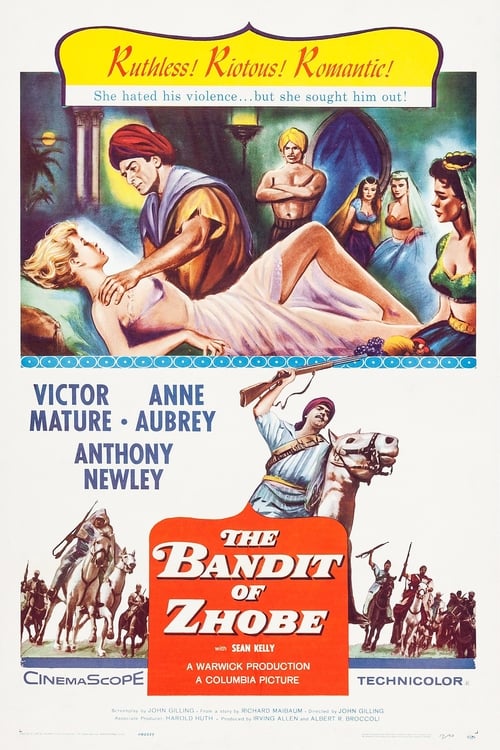
The Bandit Of Zhobe
1959
No user ratings available yet
Representation score: 2.0 out of 10

Representation Score
Minimal
1956
ApprovedDirector
Terence Young
Runtime
99 minutes
Average Rating
No ratings yetNew Showbiz Analysis
Zarak is a typical mid-century adventure film that upholds the social hierarchies of its time. The story centers on a Western protagonist's journey, using a South Asian setting primarily as an exotic backdrop rather than a space for developing local characters. The film reinforces traditional gender roles and lacks any meaningful LGBTQ+ representation. The narrative structure aims to restore a recognizable social order, avoiding any critique of the colonial-era power dynamics inherent in its setting.
Category Breakdown
The film does not include any representation of LGBTQ+ identities or same-sex relationships. The romantic storyline centers around a traditional male-female couple.
Traditional gender roles are maintained throughout the film. The female lead mainly serves as a romantic interest, while masculinity is defined by physical strength and leadership.
The main characters are predominantly white, and the South Asian setting is used primarily as a backdrop rather than a platform for developing local characters.
The film follows mid-century Western adventure standards without questioning institutional authority. It lacks any anti-colonial sentiments, focusing instead on individual heroism and traditional justice.
There are no characters with visible or invisible disabilities that play a significant role in the plot.
Present on Screen
Limited or Absent
Official Synopsis
A notorious bandit develops a grudging respect for the English military man assigned to capture him.
1959
1961

1966
1959
1973
1970
1967
1964
No reviews yet. Be the first to share your thoughts on this movie!
Use the rating form above to leave a star rating and optional review.