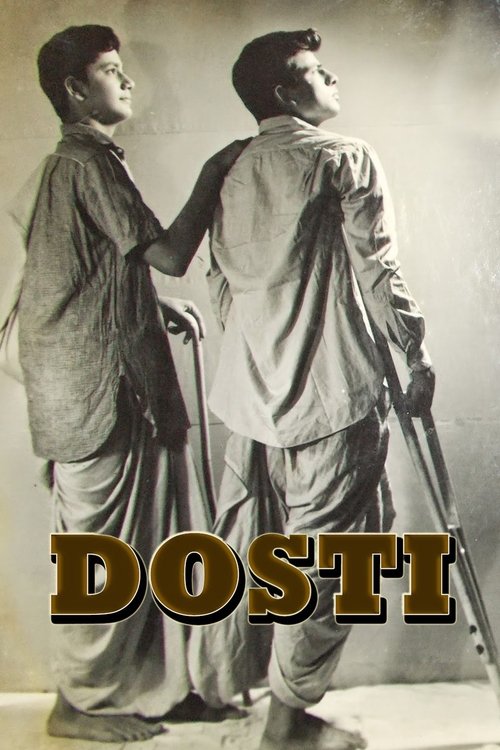
Dosti
1964
No user ratings available yet
Representation score: 4.4 out of 10

Representation Score
Fair
1972
Director
Manoj Kumar
Runtime
170 minutes
Average Rating
No ratings yetNew Showbiz Analysis
Shor is a social realist drama that uses personal tragedies to highlight the structural inequalities faced by rural Indians after independence. The film's strength lies in its critique of systemic corruption and the exploitation of the peasantry by local elites. It presents the protagonist's struggle against these issues as a justified response to a flawed system. However, the film adheres to traditional gender roles and domestic frameworks, lacking any representation of LGBTQ+ identities. Additionally, while disability is central to the plot, it primarily serves as a device to heighten the stakes rather than exploring deeper character development.
Category Breakdown
The film does not include any LGBTQ+ characters or stories that go beyond traditional heterosexual relationships. It focuses on conventional romantic pairings and family structures typical of 1970s cinema.
Gender roles adhere to traditional mid-century hierarchies. Geeta is portrayed within a traditional domestic framework, and the film does not challenge patriarchal structures or explore masculinity in new ways.
The cast is predominantly South Asian, offering an authentic look into the rural life of India during the time period. It accurately reflects the demographics of the era.
The story provides a nuanced look at power dynamics, showing how local elites exploit peasants. It portrays the protagonist's turn to vigilantism as a reaction to systemic corruption.
Deepak’s inability to speak drives the plot and emphasizes the harsh realities of economic hardship. However, his disability mainly serves as a plot device rather than a deep exploration of his experiences.
Present on Screen
Limited or Absent
Official Synopsis
Shankar , his lovely wife Geeta and Deepak are a poor but happy family. Tragedy strikes one day, when Deepak wonders over to the railway tracks. When Geeta rushes in to warn and rescue him, she is run over by the train and is instantly killed. Deepak loses his vocal chords and cannot speak. Shankar takes Deepak to see a doctor , who examines Deepak, and tells Shankar that Deepak can recover his voice after a surgerical operation, which may cost around 1000 to 1500 rupees. Shankar is unable to afford this but is determined to find the money to cure his son. Shankar's mom , sister , Khan Badshan , Rani alias Raat ki Rani offer support. And Shankar takes part in a grueling tournament that puts his very life at risk.
1964
1993

1983

1974
1967

1989
1982
1974
No reviews yet. Be the first to share your thoughts on this movie!
Use the rating form above to leave a star rating and optional review.