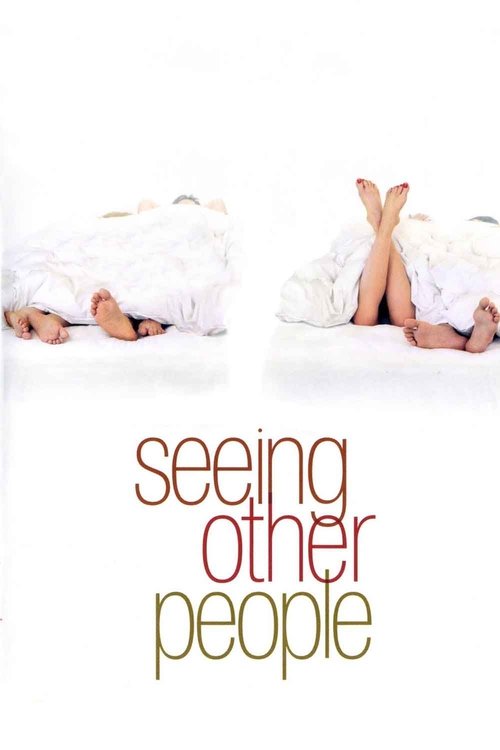
Seeing Other People
2004
No user ratings available yet
Diversity score: 5.3 out of 10

2004
Director
Matt Chow Hoi-Kwong
Runtime
90 minutes
Average Rating
No ratings yetSynopsis
Truly reflecting Hong Kong people's attitudes of love and marriage, "Itchy Heart" tells a story of a married man who wants to look for excitement out of marriage by meeting someone new. As his wife going out for a trip, Chi-man's (Lau Ching-Wan) desires to new excitement have overwhelmed him as he meets beautiful and young Cherry (Cherry In) and his former girlfriend Bing (Carina Lau). After knowing his wife's affair, he decides to get divorced, without knowing whether he should give himself a second chance to be in love again. This is a comedy reflecting a so-real reality on marriage nowadays. With the detailed portraits of the characters' emotions, the story itself has successfully created echoes among the audience with its bitter-sweet scenario.
Overall Score
Fair
Category Breakdown
LGBTQ+ Representation
The film centers on heteronormative relationship structures and the friction within them. There is no explicit evidence of queer narratives or non-cisnormative identities present.
Gender Representation
Female characters like Cherry and Bing act as catalysts for the protagonist's crisis rather than passive archetypes. The depiction of the wife's affair subverts traditional tropes of domestic virtue.
Racial & Ethnic Diversity
The story is culturally specific to a Cantonese-speaking milieu in Hong Kong. It focuses on local middle-class nuances rather than diverse ethnic blending or race-bending.
Religious & Cultural Diversity
The narrative deconstructs traditional values by portraying marriage as a site of potential dysfunction. It prioritizes individualistic, secular ethics over the preservation of the sacred family unit.
Disability Representation
No visible or invisible disabilities are central to the character arcs or the plot progression.
Strengths
Areas for Improvement
AI Analysis
Itchy Heart offers a grounded, observational look at the complexities of modern urban life and marital dissolution. It succeeds by challenging traditional social institutions and providing nuanced, non-idealized portrayals of gendered expectations. However, the film's scope is limited by a lack of intersectional representation. The narrative remains strictly focused on heteronormative dynamics and lacks explicit LGBTQ+ perspectives or broader ethnic diversity. Ultimately, while the film provides a sharp critique of the nuclear family, its narrow demographic focus prevents a higher diversity score.
2004

1994

2001

2004

2008

2001

2018

2003
2001
2000
No reviews yet. Be the first to share your thoughts on this movie!
Use the rating form above to leave a star rating and optional review.