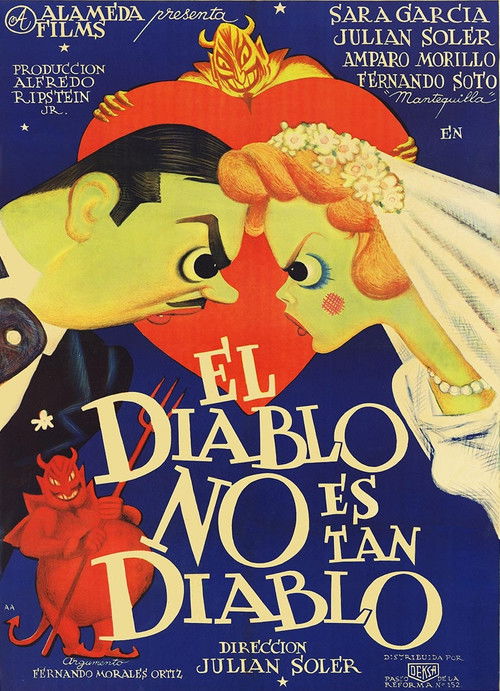
El diablo no es tan diablo
1949
No user ratings available yet
Representation score: 1.3 out of 10
Representation Score
Fair
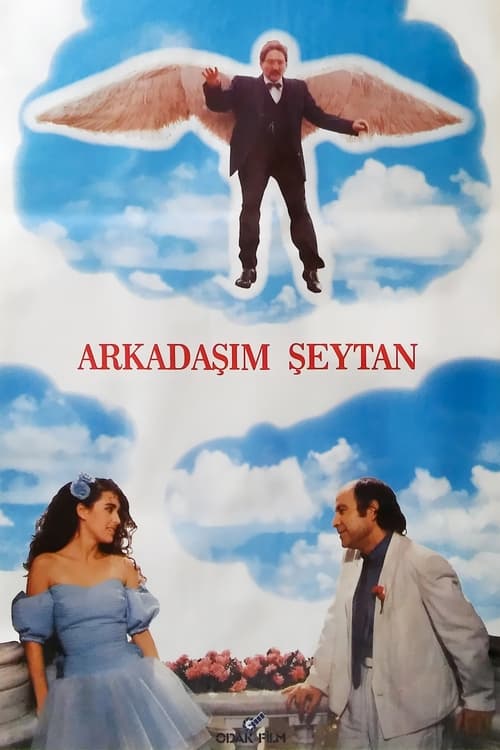
1988
Director
Atıf Yılmaz
Runtime
90 minutes
Average Rating
No ratings yetNew Showbiz Analysis
Atıf Yılmaz employs a sophisticated narrative structure to critique capitalist ambition and traditional morality. The film's strength lies in its ability to challenge religious clichés, using a fantasy premise to explore the predatory nature of fame and social hierarchies. While the film provides a valuable non-Western perspective, it lacks specific demographic representation. The focus remains on a singular protagonist's moral descent rather than a diverse ensemble of identities. Ultimately, the work functions as a social critique, prioritizing systemic and ethical exploration over contemporary identity politics, offering a localized view of universal human struggles.
Category Breakdown
The film does not include any explicit LGBTQ+ characters or narratives. The story revolves around the protagonist's personal struggle with fame and morality.
The narrative centers on a male musician's Faustian bargain. While the director delves into human relationships, the primary focus remains on the protagonist's individual journey.
As a Turkish production, the film offers a non-Western perspective. It avoids Western-centric homogeneity by grounding its universal themes in a specific regional identity.
The film uses moral relativism to critique traditional religious morality. By portraying humans as more cunning than the devil, it challenges standard ethical frameworks.
There is no mention of characters with visible or invisible disabilities within the narrative.
Present on Screen
Limited or Absent
Official Synopsis
Fatih is a musician who can never seem to get where he wants to be. One day, he sells his soul to the devil in exchange for fame. But over time, he realizes that people are worse and smarter than the devil.
1949
1988
1973
1960

1984

1967
1980
1966
No reviews yet. Be the first to share your thoughts on this movie!
Use the rating form above to leave a star rating and optional review.