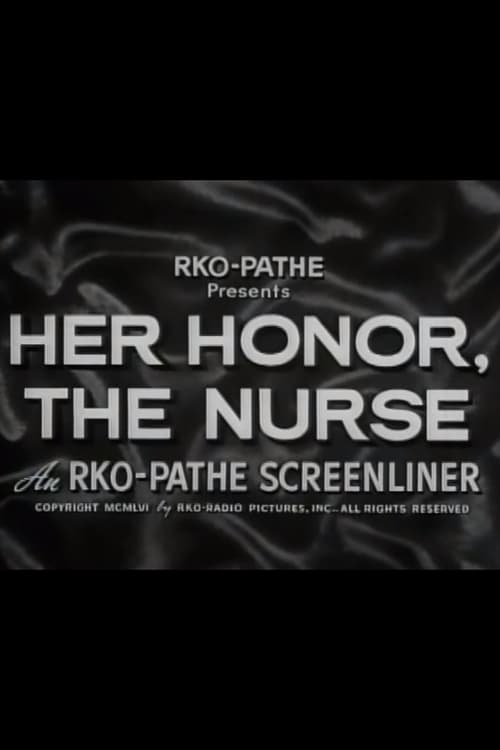
Her Honor, the Nurse
1956
No user ratings available yet
Diversity score: 1.6 out of 10
No Poster Available
1947
ApprovedDirector
Harry W. Smith
Runtime
16 minutes
Average Rating
No ratings yetSynopsis
This edition of the series, Volume 7, Number 2, examines the concerns in the medical profession regarding the shortage of qualified nurses. It takes a look at the importance of the profession, the training they must undergo and a glimpse of their social life during the three-year journey taken by student-nurses.
Overall Score
Limited
Category Breakdown
LGBTQ+ Representation
The film offers no evidence of LGBTQ+ characters or narratives. It likely adheres to the heteronormative social constraints typical of 1947.
Gender Representation
The documentary centers on women in nursing, highlighting female labor and professional training. However, it frames these women within traditional, era-specific caregiving roles.
Racial & Ethnic Diversity
There is no evidence of a diverse cast. The film likely reflects the homogeneous demographic norms of mid-century American educational filmmaking.
Religious & Cultural Diversity
The narrative celebrates institutional stability and professional duty. It emphasizes traditional social cohesion and mid-century Western values regarding healthcare and education.
Disability Representation
No specific portrayal of individuals with disabilities is evident. The film likely views medical subjects through a clinical, patient-centric lens rather than focusing on agency.
Strengths
Areas for Improvement
AI Analysis
Girls in White serves as a historical document of vocational training rather than a tool for social subversion. While it provides visibility to women in the medical field, it does so within a rigid, institutional framework that reinforces post-war social hierarchies. The film lacks intersectional depth, showing no evidence of racial, cultural, or LGBTQ+ diversity. It functions primarily to uphold the professional standards and demographic norms of 1947. Ultimately, the documentary prioritizes the stability of the nursing profession over the representation of marginalized identities, resulting in a narrow, traditional perspective.
1956
1955

1937
1935

1956
1952
1951
1945

1939
1899
1947
1956
No reviews yet. Be the first to share your thoughts on this movie!
Use the rating form above to leave a star rating and optional review.