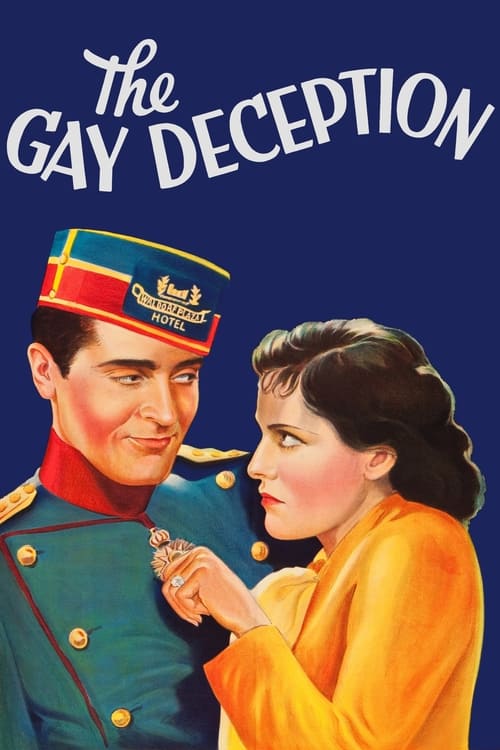
The Gay Deception
1935
No user ratings available yet
Diversity score: 2.8 out of 10
1930
NRDirector
George Fitzmaurice
Runtime
72 minutes
Average Rating
No ratings yetSynopsis
Spendthrift Willie Hale again returns penniless to the family home in London. His father is none too pleased, but Willie smooth-talks him into letting him stay. At the same time he turns the charm on Dorothy Hope, whose father is big in linoleum and who, before Willie's arrival, was about to become engaged to a Russian aristocrat.
Overall Score
Limited
Category Breakdown
LGBTQ+ Representation
The film lacks any evidence of LGBTQ+ characters or non-heteronormative identities. The plot focuses on a traditional romantic rivalry between Willie Hale and a Russian aristocrat for Dorothy Hope.
Gender Representation
Dorothy Hope is a central figure, yet her role is defined by her relationships with men and her father's status. The story relies on male charm and social maneuvering.
Racial & Ethnic Diversity
The setting centers on Anglo-Saxon social structures in London. While a Russian aristocrat is mentioned, this serves as a marker of class rather than ethnic diversity.
Religious & Cultural Diversity
The narrative reinforces Western social hierarchies and class structures. Conflict arises from familial expectations, wealth, and the navigation of traditional social mores and romantic propriety.
Disability Representation
There is no mention of characters with visible or invisible disabilities. No information is available regarding the portrayal of neurodivergence or physical impairments.
Strengths
Areas for Improvement
AI Analysis
The film operates as a conventional romantic comedy of the early sound era, prioritizing established social hierarchies and traditional tropes. The narrative structure focuses on class-based conflict and male-driven social maneuvering. While the inclusion of a Russian aristocrat adds an international element, it functions more as a tool for class distinction than a meaningful disruption of ethnic homogeneity. The film adheres strictly to the social norms of 1930s London. Ultimately, the work lacks the intentionality needed to challenge or subvert standard expectations regarding gender, race, or identity, serving instead as a window into the era's existing social dynamics.
1935
1933

1933
1931

1935

1929
1938
1938
1937

1927
1928
1931
No reviews yet. Be the first to share your thoughts on this movie!
Use the rating form above to leave a star rating and optional review.