
Little Miss Innocence
1973
No user ratings available yet
Representation score: 0.4 out of 10
Representation Score
Limited
1973
RDirector
Albert Zugsmith
Runtime
85 minutes
Average Rating
No ratings yetNew Showbiz Analysis
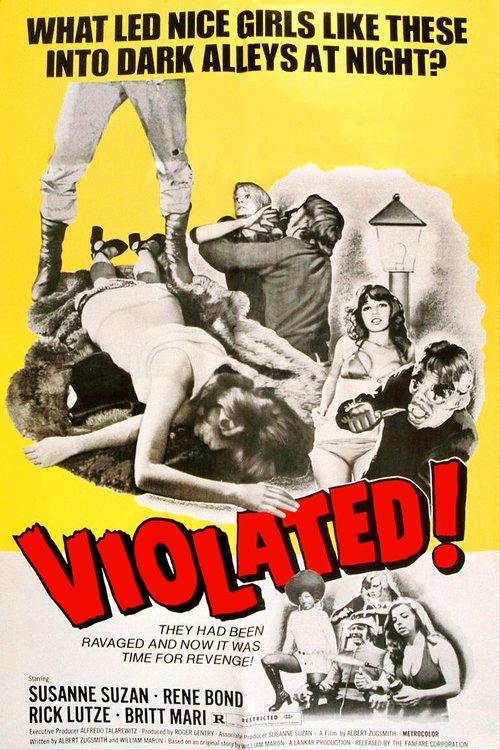
Violated! is a product of its 1970s exploitation cinema context, prioritizing genre clichés over broad representation. While it avoids some common issues of the era, it remains limited by the social norms of its time. The film's main strength is in its gender dynamics. By centering the victim's perspective, it offers a level of women's ability to drive the story that was often missing in mid-century crime dramas. However, the film lacks diversity in almost every other category. The cast is predominantly white, and there is no meaningful representation of LGBTQ+ identities or disability.
Category Breakdown
The film does not include any identifiable LGBTQ+ characters or stories. It focuses solely on sexual assault within a traditional framework that assumes everyone is straight.
The story centers on the female experience of trauma through Eve Plumb's character. It challenges the typical male savior cliché by giving the protagonist a significant role in driving the story.
The cast is mostly white, reflecting the demographic makeup of its time. There is no indication of diverse ethnic perspectives or intentional casting that ignores race.
The film follows traditional Western social structures. It questions legal responses to violence but does not challenge institutions like religion or capitalism.
The film does not intentionally portray physical or neurodivergent disabilities. Psychological trauma is shown as a plot consequence rather than explored through character development.
Present on Screen
Limited or Absent
Official Synopsis
Previously lost rape and revenge mystery about a swastika-carving masked marauder that brutalizes women in Los Angeles.
1973
1973

1989

1978
1974

1981
1979

1972
No reviews yet. Be the first to share your thoughts on this movie!
Use the rating form above to leave a star rating and optional review.