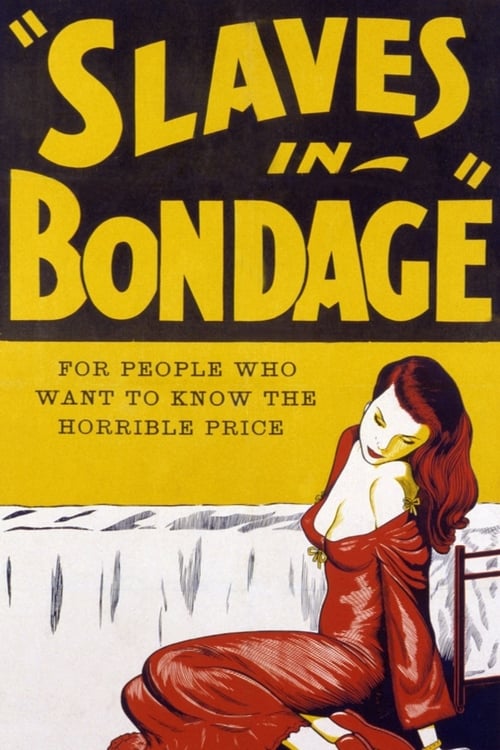
Slaves in Bondage
1937
No user ratings available yet
Diversity score: 2.8 out of 10

1935
ApprovedDirector
Phil Rosen
Runtime
67 minutes
Average Rating
No ratings yetSynopsis
Dan Matthews (Richard Arlen), a young parson, is in love with Hope Strong (Charlotte Wynters), the daughter of James B. Strong ('FRederick Burton'), a man who controls the town with his real estate and business interests. Strong is an upstanding citizen who has fallen into the hands of a clever racketeer, Jeff Hardy (Douglass Dumbrille), who acts as Strong's manager of some innocent-appearing amusement places that are really secret dens of vice.
Overall Score
Minimal
Category Breakdown
LGBTQ+ Representation
The story follows a traditional heterosexual romance between Dan Matthews and Hope Strong. No non-cisnormative identities or critiques of heteronormativity are present.
Gender Representation
Female characters like Hope Strong are defined by their relationships to men. Moral agency and leadership are concentrated almost exclusively in the male protagonists.
Racial & Ethnic Diversity
The cast appears homogeneous, reflecting the era's studio norms. There is no evidence of racial blending or diverse identities challenging the social status quo.
Religious & Cultural Diversity
The plot centers on a binary struggle between clergy-led morality and systemic vice. It reinforces traditional Western institutions rather than critiquing them.
Disability Representation
The narrative contains no documented characters with visible or invisible disabilities.
Strengths
Areas for Improvement
AI Analysis
The film operates as a standard 1930s genre piece, relying heavily on established archetypes. It prioritizes a conventional moral struggle between a parson and a racketeer, which reinforces the social hierarchies of its time rather than subverting them. Representation is limited by the era's studio system. The narrative focuses on a heterosexual romantic core and a homogeneous cast, offering little room for intersectional complexity or diverse perspectives. Ultimately, the film functions within a rigid framework of mid-century moralism. It lacks the character agency or social disruption necessary to move beyond a traditional, narrow worldview.
1937
1934
1937
1939
1935
1939
1932
1932
1935
1953
1944
1942
No reviews yet. Be the first to share your thoughts on this movie!
Use the rating form above to leave a star rating and optional review.