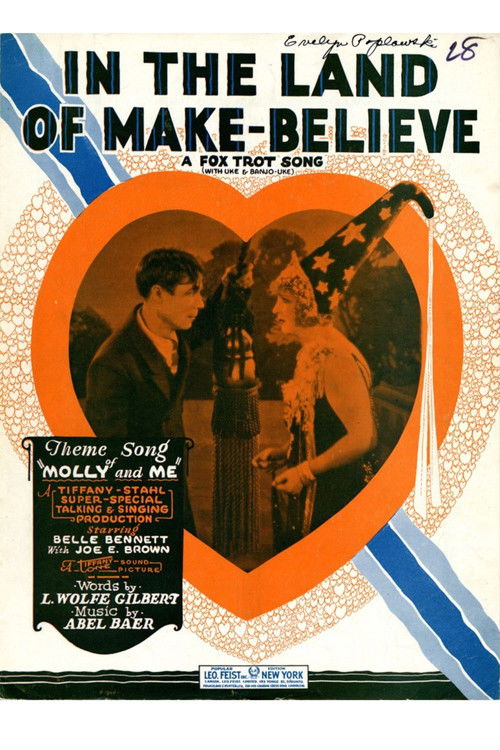
Molly and Me
1929
No user ratings available yet
Representation score: 0.0 out of 10

Representation Score
Minimal
1927
PassedDirector
Dorothy Arzner
Runtime
70 minutes
Average Rating
No ratings yetNew Showbiz Analysis
The film opens with the glittering, anxious surface of 1920s urban life, where Esther Ralston’s Kitty O'Day embodies the era’s "modern" woman. Yet the camera’s gaze is not celebratory; it is diagnostic. Arzner frames Kitty’s autonomy not as liberation but as a moral fracture, a deviation from the stable, white, heterosexual order that the film treats as natural law. The sold meaning is clear: the "new woman" is a cautionary tale. Her desires for independence and sexual freedom are not validated but pathologized, leading inevitably to social and personal ruin. The narrative logic is conservative. While Kitty is the protagonist, she is not the moral center. That role belongs to the traditional structures she disrupts, personified by figures like Aunt Ruby and the respectable Tod Gilbert. The film argues that female agency, when detached from domestic duty and chastity, is a form of self-destruction. The ending, though lost to time, is implied by the genre’s conventions of the era: the modern woman is punished, and the traditional order is restored. The camera loves Kitty’s beauty but despises her choices, treating her body as a site of moral compromise rather than self-expression. This is a period piece that does not critique its own values but reinforces them. The "commandments" of the title are not arbitrary rules but the film’s thesis: that happiness for women lies in obedience, marriage, and the suppression of individual desire. The film’s internal logic is consistent, even if its logic is oppressive. It offers no counter-narrative, no suggestion that the "modern" life might be preferable. Instead, it uses Kitty’s suffering to warn against the dangers of social transgression, positioning the family and Christian morality as the only safe harbor. The final image, in the film’s argument, is one of resignation: the modern woman, having paid the price of her freedom, is left hollow, while the traditional structures remain intact and unchallenged.
Category Breakdown
No queer markers appear. The romantic arc is strictly heterosexual. Kitty’s path follows a standard male-female pairing without deviation.
Kitty’s independence is framed as distress, not competence. The narrative punishes her deviation from domesticity. Traditional stability is the moral anchor.
The cast is entirely white. No non-white characters appear in principal or supporting roles. This reflects the unmarked hierarchy of 1920s Hollywood.
The film upholds 1920s social norms. Premarital sex and female autonomy are treated as moral failings. Christian values of chastity and obedience are enforced.
No characters with disabilities appear. Disability is not referenced as a thematic element. It is absent from the plot and cast.
Present on Screen
Limited or Absent
Official Synopsis
A chorus girl falls in love with a budding composer.
1929
1934
1939
1928
1936

1933
1925

1931
No reviews yet. Be the first to share your thoughts on this movie!
Use the rating form above to leave a star rating and optional review.